Precision cooling · Selection guide
Precision AC vs Comfort AC for Server Rooms: How to Choose
A practical selection guide for sensible capacity, year-round operation and server-room resilience.
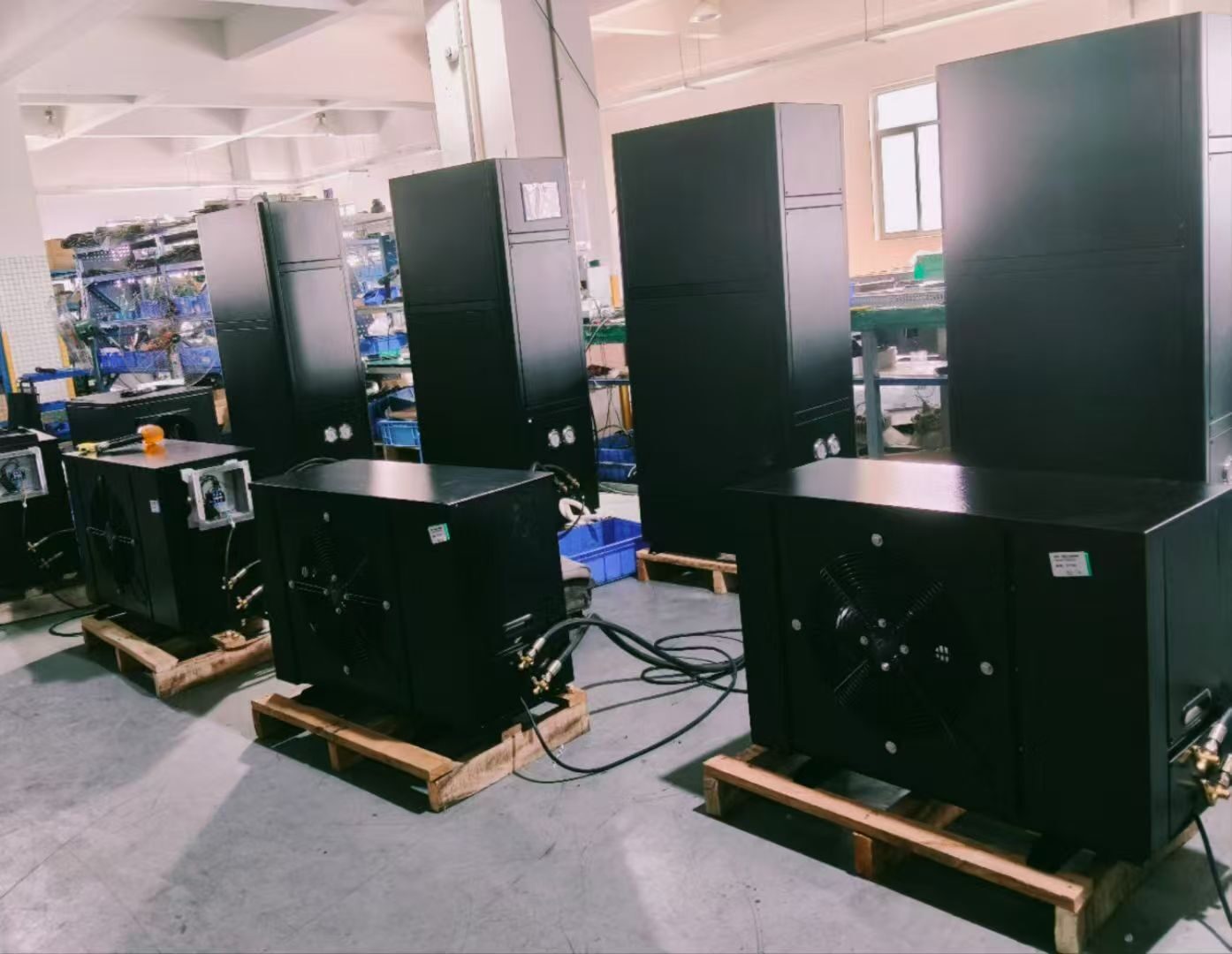
Compare useful cooling at the same design conditions.
Verify year-round cooling and outdoor limits.
Specify changeover, alarms and acceptance evidence.
Choose server-room cooling by its verified sensible capacity, operating envelope and failure response, rather than its nominal cooling label. A small room does not automatically justify a comfort unit, and a precision label does not prove that an installation is resilient. The equipment must meet the IT load at the specified indoor and outdoor conditions, with an acceptable response when a component stops.
Key takeaways: compare sensible duty at matching conditions; separate continuous availability from actual compressor run time; and specify an acceptance test that measures conditions at the equipment inlet. If you have not established the room load, start with the server room cooling load worksheet. This guide covers the equipment-selection step that follows.
Prepared with AI assistance for SongXin HVAC. Draft updated September 9, 2026; human technical review has not yet been completed.
Turn the cooling requirement into a pass-or-fail specification
Do not treat split and precision as opposite categories
Split describes an equipment configuration, while precision cooling describes the intended application and environmental control. The U.S. Department of Energy’s equipment overview identifies mini-splits and multi-splits as split-system configurations. Equipment-room cooling can also use separate indoor equipment and an outdoor condenser, as illustrated in the Vertiv Liebert PDX design catalog. These examples clarify terminology; they do not establish the performance of a SongXin model.
In an RFQ, name both the arrangement and the required duty. Compare a comfort-oriented split system with the proposed equipment-room cooling system at the same conditions, rather than rejecting every product described as split.
Precision air conditioning is cooling designed around the thermal and environmental needs of technical equipment. Comfort air conditioning primarily serves occupied spaces. Those design objectives influence airflow, controls and the operating conditions for which equipment is selected.1
For procurement, convert that distinction into evidence the supplier can provide. Write down the required sensible cooling duty, allowable equipment-inlet conditions, outdoor operating range and response to a fault. If a proposal cannot demonstrate these requirements, its product category does not make it acceptable.
Use the same basis for every quotation. A capacity declared at a warmer return-air temperature cannot be compared directly with a capacity at a cooler return condition. A gross coil capacity also cannot automatically be treated as the net capacity available to the room. Require the supplier to identify the selection boundary and any fan-heat allowance.
The SongXin precision air conditioner page describes equipment-room applications and selection inputs. Use those inputs to start a project-specific discussion; the category page is not a substitute for a model selection sheet.
Equal total capacity can deliver unequal sensible cooling
Sensible cooling lowers air temperature; latent cooling removes moisture. Sensible heat ratio, or SHR, is sensible cooling divided by total cooling at the stated condition. STULZ describes indicative comfort-system SHR values of 0.60–0.80 and precision-system values of 0.90–1.00. These are reference ranges, not guaranteed ratings for every product.2
The following normalized example shows why that distinction changes purchasing decisions. It assumes an arbitrary 10 kW sensible load and applies selected SHR values from those published ranges. It is arithmetic for explanation, not a real customer project or an equipment selection.
| Assumed SHR at the comparison condition | Sensible share of total capacity | Total capacity corresponding to a 10 kW sensible duty |
|---|---|---|
| 0.60 | 60% | 16.67 kW |
| 0.80 | 80% | 12.50 kW |
| 0.90 | 90% | 11.11 kW |
| 1.00 | 100% | 10.00 kW |
Calculation: total capacity = sensible duty ÷ SHR. Values are rounded to two decimal places. The SHR inputs come from the STULZ reference; the 10 kW load is an explicitly assumed normalization.2
Do not use this table to oversize a comfort unit mechanically. Actual sensible capacity changes with entering-air conditions, airflow and the selected equipment. Obtain the manufacturer’s sensible-capacity output for the design point. If that output is unavailable, the proposed unit has not yet demonstrated the required duty.
Humidity should also be an explicit requirement. Do not specify humidification simply because the room contains servers. Establish the equipment’s permitted environment and the actual moisture load, then select the necessary control functions. Unnecessary moisture removal and replacement can create avoidable operation and maintenance work.
Specify full-year availability without assuming full-load operation
A cooling service required throughout a non-leap year must be available for 24 × 365 = 8,760 hours. That does not mean the compressor operates at full load for 8,760 hours. STULZ identifies year-round operation as a precision-cooling design objective; the annual total here is a calendar calculation.2
Request the proposed model’s cooling operating limits at both outdoor extremes. If the site needs cooling during cold weather, a high summer capacity rating does not establish winter suitability. The supplier should state whether the quoted configuration can run at the site’s minimum ambient condition and identify any required accessories.
For an operating-cost comparison, use input power over the expected load profile. An annual difference cannot be inferred from SHR alone.
Here is a reusable sensitivity example. Assume one option draws 1 kW less average electrical power, the tariff is $0.12/kWh, and the comparison period is five years. These are teaching assumptions, not measured product differences or a market tariff.
| Assumed equivalent hours per year | Calculated annual electricity difference | Calculated five-year electricity-cost difference |
|---|---|---|
| 2,000 h | 2,000 kWh | $1,200 |
| 4,000 h | 4,000 kWh | $2,400 |
| 8,760 h | 8,760 kWh | $5,256 |
Cost difference = 1 kW × annual hours × $0.12/kWh × five years. This undiscounted illustration excludes maintenance, replacement, demand charges and downtime. Replace every assumed input with proposal or site data before using it to justify a purchase.
Test the air path, not just the room thermostat
The intended outcome is acceptable air entering the IT equipment. A room sensor can report a satisfactory temperature while a rack receives recirculated exhaust. Increasing nominal cooling capacity does not by itself demonstrate that the supply air reaches the load.1
For each proposal, mark supply outlets, equipment inlets, exhaust routes and sensor locations on the room drawing. Require the airflow arrangement to remain workable with the expected rack layout and expansion plan. If access panels, storage or cable routes would obstruct the selected air path, correct the layout before selecting a larger unit.
An in-row cooling arrangement may be worth evaluating where the room arrangement calls for more localized delivery. It should still be selected against the real rack duty, return conditions and service constraints.
The following flow is a screening tool, not an automatic sizing method.
No → Request a corrected selection or reject the proposal. Yes → Check the operating envelope.
No → Request a corrected selection or reject the proposal. Yes → Check airflow and fault response.
No → Revise the layout or resilience design. Yes → Compare lifecycle scope and acceptance evidence.
Figure: server-room cooling qualification, from documented thermal duty through operating limits, airflow and fault response.
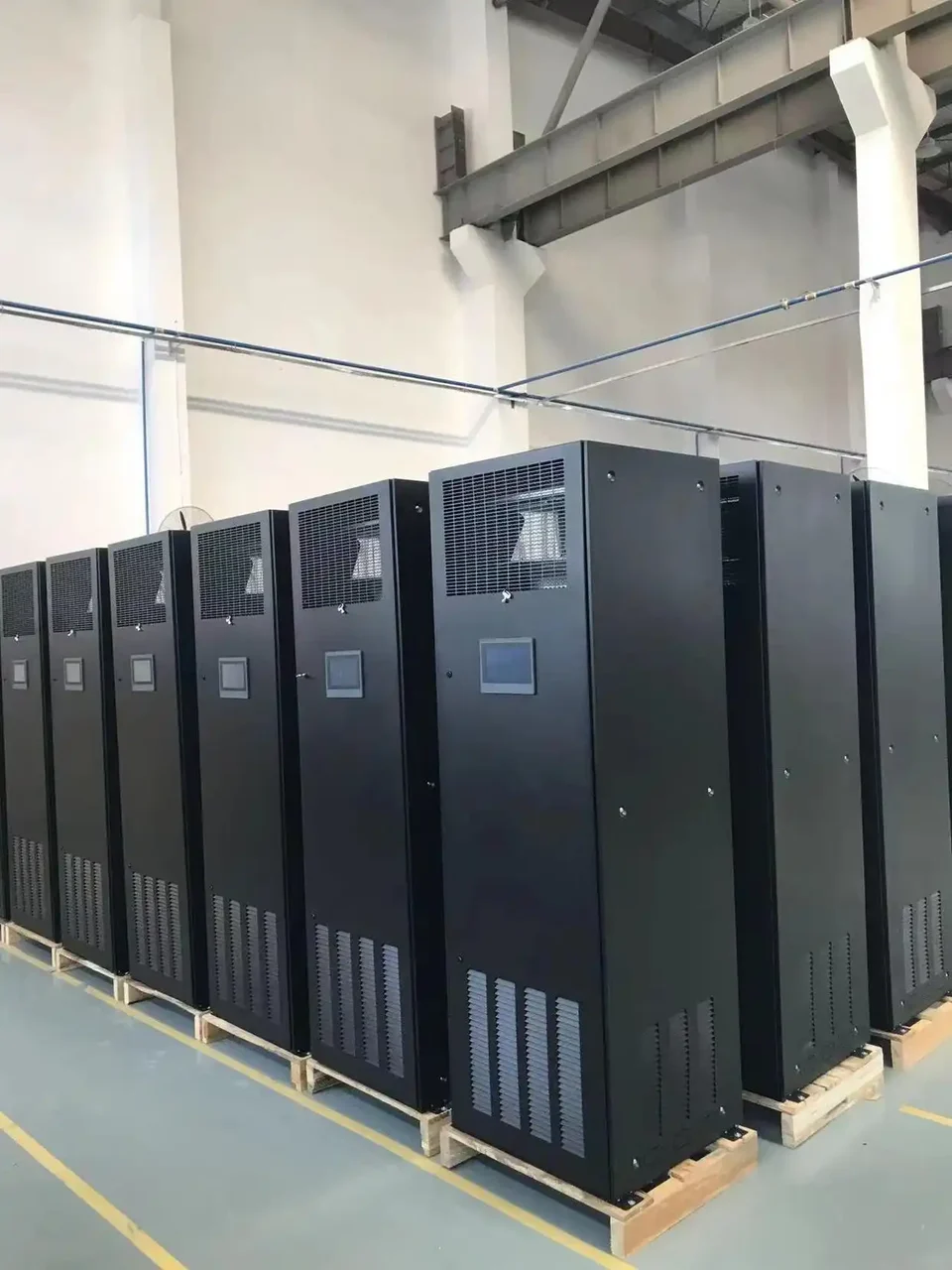
Explore in-row cooling
Make the failure response part of the purchase
A standby unit only adds resilience if the room can use it when needed. Define the failure event and the required remaining cooling service. A second unit sharing an unavailable power source or a failed common controller may not satisfy that requirement.
Agree on the test boundary before simulating a fault
Treat the following matrix as proposed acceptance planning, not an instruction to interrupt an operating server room. Have the facility owner and responsible engineer approve the test method, operating window, protective arrangements, stop conditions and restoration plan. Record who can stop the test and how cooling will be restored. Where a live failure simulation is unacceptable, agree on another method and document what it does and does not demonstrate. Do not disconnect cooling or power simply to complete a checklist.
Include these proposed acceptance items in the purchase specification:
| Test or record | Evidence to request | Decision rule |
|---|---|---|
| Normal operation | Logged equipment-inlet conditions under the agreed test load | Accept only if the project envelope is maintained |
| Loss of an operating unit | Remaining duty, changeover sequence and temperature trend | Remaining service must meet the specified failure scenario |
| Alarm delivery | A witnessed fault and recorded notification | The designated operator must receive the correct alarm |
| Power restoration | Documented restart and coordination sequence | Recovery must follow the agreed restart priorities |
| Service access | Access route and maintenance demonstration | Routine service must be possible within the agreed continuity plan |
These are suggested contract criteria, not a claim that SongXin has performed these tests on a particular project. For the equipment category, see computer room air conditioners.
When a comfort unit may still be a reasonable candidate
A comfort unit may be considered for a modest, low-criticality technical room when its documented selection meets the complete requirement. That means more than reaching a room-temperature setpoint during a short visit.
Retain it as a candidate only when the required sensible duty, continuous-service suitability, outdoor limits, air distribution, alarm arrangement and service response are all supported. If a critical requirement is absent, evaluate a different configuration. Likewise, do not pay for precision features that solve no documented problem: the specification should explain why each function is required.
Send a comparable RFQ to every supplier
Provide the following information so quotations answer the same problem:
- Present and planned sensible cooling duty, with the basis of calculation.
- Equipment-inlet temperature and humidity requirements supplied by the IT design team.
- Room and rack layout, ceiling arrangement and proposed airflow path.
- Outdoor design conditions and required operating schedule.
- Available electrical supply and the agreed failure scenario.
- Monitoring points, alarm destination and restart requirements.
- Service access restrictions and the requested commissioning evidence.
Request a selection sheet with model, total and sensible capacity, power input and rating conditions. Ask the supplier to state exclusions and any required ancillary equipment. Send the package through SongXin technical support to discuss an equipment selection against those conditions.
Frequently asked questions
Can a normal air conditioner cool a small server room?
It can be a candidate if its documented performance satisfies the room’s thermal and operational requirements. Floor area alone is not enough to decide. Compare sensible capacity at the actual conditions, year-round operating limits, airflow delivery and the agreed response to failure before accepting the proposal.
Is precision AC always more energy efficient than comfort AC?
No universal efficiency result follows from the category name. Compare electrical input at equivalent sensible duty and operating conditions, including fans and any humidity-control energy. Use the expected load profile and service costs. A higher SHR can improve capacity matching without, by itself, proving a lower annual electricity bill.
Should I select a computer room air conditioning unit by nominal capacity?
Nominal capacity is only a starting point. Request net sensible capacity at the specified return-air, outdoor and airflow conditions. Confirm what is included in the selection boundary. A proposal with sufficient total capacity can still fail to demonstrate the sensible duty required by the equipment in the room.
Does a precision cooling unit remove the need for backup cooling?
No. Precision cooling describes an equipment function, while backup provision addresses the consequences of failure. Establish the required remaining service when a unit or shared component becomes unavailable. Then verify controls, power dependencies, changeover and service access against that requirement instead of assuming the product name provides redundancy.
References
-
Trane, Comfort Cooling vs. Precision Cooling for Data Centers, published August 7, 2026; accessed September 9, 2026. Used for the distinction between occupied-space cooling and equipment-focused environmental and airflow requirements. ↩↩
-
STULZ USA, Precision Cooling vs Comfort Cooling, accessed September 9, 2026. Used for the indicative SHR ranges and continuous-operation distinction. Calculations and assumed cost inputs in this article are explanatory, not STULZ or SongXin product claims. ↩↩↩