Air-Cooled Screw Chiller Buying Guide: Capacity, High-Ambient Performance, Efficiency & RFQ
An engineering-based procurement guide for HVAC contractors, plant engineers and international B2B buyers. Verify actual cooling duty at the site’s ambient, examine compressor part-load operation, and compare supplier quotations on equivalent technical terms.
Jump to a section
How to Select an Air-Cooled Screw Chiller: Quick Answer
Two chillers with a similar catalog capacity can deliver different outputs, efficiency and operating behavior at the actual site. Before approving a model, determine whether the proposed packaged chiller can meet the required net cooling capacity at the design ambient temperature, fluid conditions and expected load profile.
| Selection parameter | Buyer must specify | Supplier must demonstrate |
|---|---|---|
| Net cooling duty | Required kW or RT | Capacity at actual outdoor and fluid conditions |
| Ambient temperature | Summer design, extreme and winter conditions | Output, electrical input and permitted operating range |
| Chilled-fluid circuit | Leaving/entering temperature, flow and fluid | Evaporator flow limits and pressure drop |
| Compressor controls | Peak, normal and minimum load | Staging/unloading and minimum stable capacity |
| Efficiency | Full-load and representative part-load duty | Selected kW input at consistent system boundary |
| Site and electric | Location, airflow, noise, voltage and frequency | Clearances, electrical ratings, drawings and sound data |
| Refrigerant | Destination-market and safety requirements | Designation, charge and model-specific documentation |
| Commercial scope | Quantity, named delivery place and acceptance | Itemized inclusion/exclusion, documents and warranty |
Start with SongXin HVAC Screw Chillers and Air-Cooled Chillers. The exact available air-cooled screw model must be confirmed by a technical selection.
What Is an Air-Cooled Screw Chiller?
An air-cooled screw chiller is a vapor-compression refrigeration package using a rotary screw compressor and an air-cooled condenser. Refrigerant removes heat from chilled water or an approved process fluid in the evaporator, is compressed, rejects heat to ambient air in condenser coils and fans, and passes through an expansion device to complete the circuit.
The actual expansion device, refrigerant, number of compressors and refrigeration circuits, economizer options and control method are model-specific. Avoid assuming every screw chiller has the same internal configuration.
Air-cooled vs water-cooled screw chillers
Both configurations can use screw compressors to produce chilled water. A conventional air-cooled unit rejects condenser heat directly to surrounding air, while a conventional water-cooled unit uses a condenser-water loop, often connected to a cooling tower. Air cooling normally avoids a separate cooling-tower and condenser-water system, but does not eliminate the chilled-water circuit.
The lower-cost or higher-efficiency choice depends on the site, water availability, climate, operating hours and complete plant scope, not compressor type alone. See our air-cooled vs water-cooled chiller comparison.
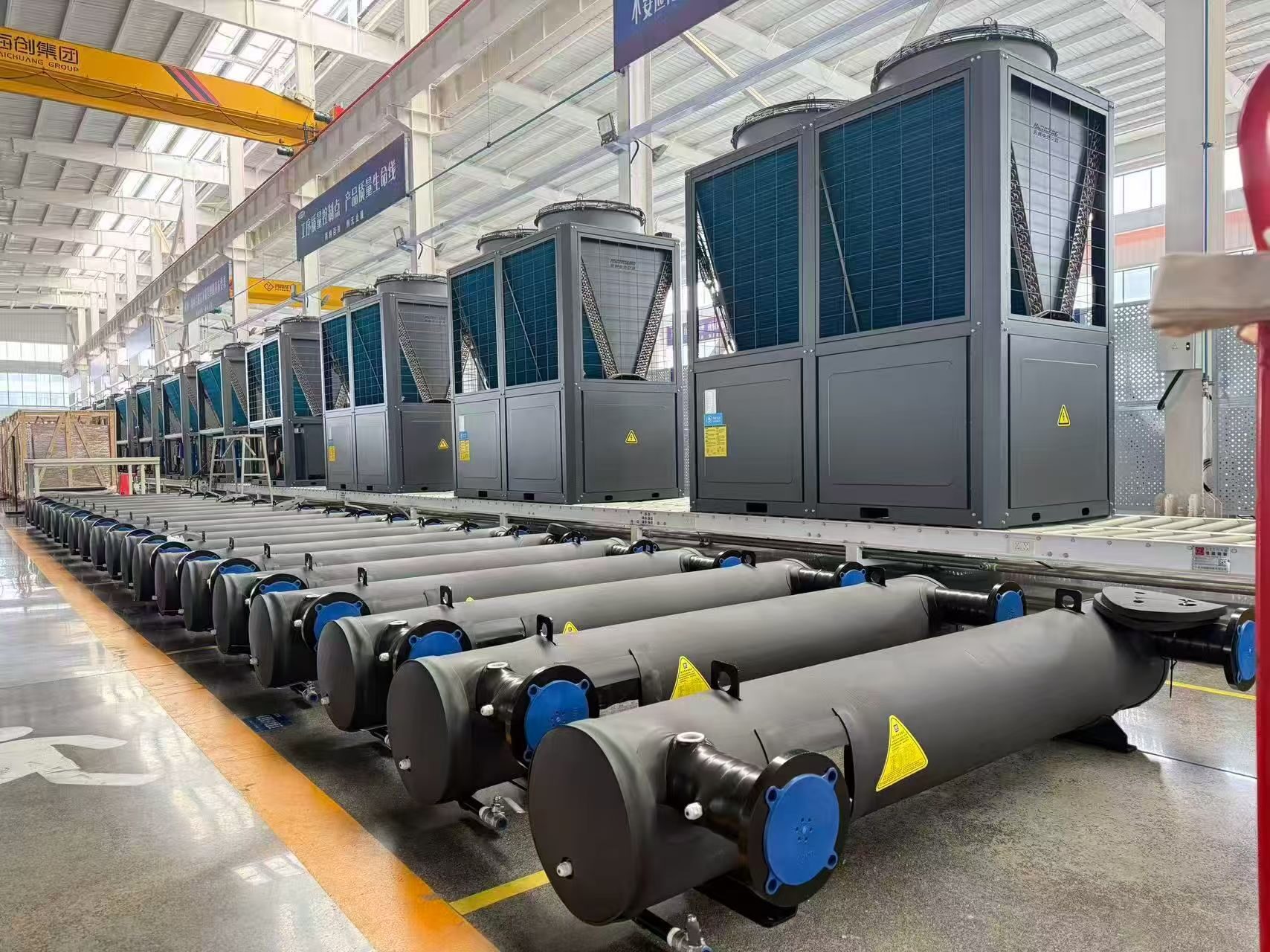
Screw compression and air-cooled heat rejection
A screw compressor identifies the compression mechanism; air cooled identifies condenser heat rejection. Confirm both features in the actual proposed model and request its manufacturer configuration sheet.
Screw vs scroll compressor packages
| Factor | Screw chiller | Scroll chiller |
|---|---|---|
| Compression | Rotary screw | Orbiting scroll |
| Capacity control | May use slide valve, variable speed and/or compressor staging | May use multiple compressor staging, variable speed or both |
| Application range | Depends on model and package design | Depends on model and package design |
| Part-load efficiency | Requires complete package data at the actual operating points | Requires complete package data at the actual operating points |
Calculate Net Cooling Capacity at Project Conditions
Chiller cooling capacity is normally stated in kW or refrigeration tons (RT). 1 RT ≈ 3.517 kW. Establish the required net cooling duty through an engineering building-load calculation or defensible process heat balance, not just an older machine’s nameplate.
For commercial HVAC, consider building envelope, internal and ventilation loads, occupancy schedules, diversity, and air-handling requirements. For industrial process cooling, specify equipment heat release, fluid temperature stability, batch schedules, and the consequences of interrupted cooling.
Q = ρ × cₚ × V̇ × ΔTQ in kW; fluid density in kg/m³; specific heat in kJ/(kg·K); volumetric flow in m³/s; temperature difference in K.For typical chilled-water calculations, a useful approximation is Q (kW) ≈ 1.163 × flow (m³/h) × ΔT (K). The factor is approximate for liquid water and must not be reused unchanged for glycol or other fluids.
| Parameter | Preliminary requirement |
|---|---|
| Net cooling duty | 350 kW |
| Chilled-water supply / return | 7°C / 12°C |
| Water temperature rise | 5 K |
| Outdoor design dry-bulb | 42°C |
| Fluid | Water, pending final quality and freeze-protection design |
Flow ≈ 350 ÷ (1.163 × 5) ≈ 60.2 m³/hEquivalent refrigeration capacity: 350 ÷ 3.517 ≈ 99.5 RT.These are hypothetical project inputs, not certified equipment ratings. A chiller labeled 100 RT is not automatically capable of producing 350 kW at 42°C ambient and 7°C leaving water. The manufacturer must verify the available net capacity at the specified ambient, chilled-water flow and temperature, and the selected refrigerant/operating envelope.
Should extra capacity be added?
A margin may be appropriate for documented uncertainty, future expansion or redundancy requirements. Arbitrary oversizing can increase cost and create minimum-load or cycling problems. State the reason for any margin and review the actual operating range before choosing a bigger nominal package.
Why Outdoor Temperature Changes the Chiller Selection
At higher entering condenser-air temperatures, an air-cooled refrigeration system generally encounters a more demanding heat-rejection condition. Depending on the model, cooling output can decline, power may increase, or operating limits may be reached. The magnitude must come from the manufacturer’s model-specific performance selection.
Rated capacity vs 42°C project capacity
When the site’s design ambient is 42°C, a capacity published at a different standard rating ambient cannot by itself prove that the unit meets the project duty. Request the capacity and full packaged-chiller input at 42°C condenser inlet air and the selected evaporator conditions.
| Required evidence | Reason |
|---|---|
| Entering condenser-air temperature | Match the actual site design point, e.g. 42°C in this example |
| Net cooling capacity | Verify delivered project duty, not nominal capacity |
| Chiller electrical input | Assess power and efficiency at the same point |
| Leaving chilled-water temperature and flow | Confirm evaporator conditions and compatibility |
| Maximum/minimum permitted ambient | Distinguish operating envelope from full-output capability |
| Condenser fan configuration | Check heat-rejection control, acoustics and electrical input |
Design ambient and extreme ambient are different
Specify where full duty is mandatory, whether reduced output is acceptable during rare temperature extremes, and the maximum ambient at which operation is permitted. A unit may be allowed to operate at an extreme temperature without delivering full design capacity at that point.
Condenser-air recirculation and altitude
Rooftop parapets, nearby walls, closely arranged chillers and obstructed fan discharge can return hot exhaust air to the condenser intake. The local entering condenser air may then be warmer than the weather-station temperature. Installation clearance and condenser airflow must be evaluated using the actual equipment drawings, not a universal clearance rule.
Air density changes with altitude. Request the appropriate performance corrections for high-altitude sites. If year-round cooling is required, verify minimum ambient, condenser fan control, freeze protection, and low-load operating limits.
“Suitable for hot climates” is not a substitute for an actual model selection showing capacity, input power, operating limits and site requirements at the design temperature.
Chilled-Water Flow, Evaporator Selection and Glycol
Chiller evaporator duty is inseparable from the actual chilled-water or process-fluid circuit. The project needs to state both entering and leaving fluid temperature, design flow, allowed pressure loss, fluid composition and flow-control method.
| Parameter | Specify |
|---|---|
| Leaving / entering fluid temperatures | Supply and return temperatures at the design duty |
| Design fluid flow | Calculated or specified flow in m³/h |
| Fluid identity | Water or specific glycol type and concentration |
| Evaporator pressure drop | Maximum allowable water-side resistance |
| Permitted flow range | Minimum/design/maximum and rate of change if variable flow |
| System volume | Minimum fluid volume and/or buffer strategy |
| Water treatment | Fluid quality, strainers and maintenance responsibilities |
Why leaving-water temperature affects performance
A model rated at 7°C leaving water may not provide the same output or efficiency at 4°C or lower. The supplier must confirm evaporator and compressor operating limits, as well as capacity and power at the actual setpoint.
Variable flow must be approved
A variable-speed circulation pump does not automatically make the evaporator suitable for arbitrary flow variation. Confirm minimum/maximum permitted flow, allowable flow-change rate, flow-proofing and safety functions, control response, and minimum system water volume.
Glycol is not rated identically to water
Glycol concentration alters density, heat capacity, viscosity, pressure drop and heat transfer. The manufacturer should issue a selection for the actual mixture and concentration. Water-based standard ratings must not be described as verified glycol performance. Confirm fluid compatibility, freeze protection, filling and ongoing maintenance provisions.
AHRI 550/590 and 551/591 provide applicable standardized water-chilling package rating methods. Special process-fluid conditions can fall outside their standard rating scope; obtain a separate project-condition selection.
How to Compare COP, EER, IPLV and Annual Electricity Use
For buying decisions, chiller efficiency must be compared at a defined electrical-input boundary and the same cooling duty, ambient and fluid conditions. A published efficiency figure at another rating point does not establish the project’s actual annual energy use.
AHRI 550/590 (I-P) and AHRI 551/591 (SI) provide performance rating methods for applicable vapor-compression water-chilling packages. They include defined full- and part-load rating conditions. The published rating does not replace a model-specific application selection at the building’s actual summer and winter conditions.
| Parameter | Selection A | Selection B |
|---|---|---|
| Net cooling capacity | 350 kW | 350 kW |
| Power input at identical declared boundary | 125 kW | 140 kW |
| Calculated COP | 2.80 | 2.50 |
| Fixed-duty operation for example | 2,000 h | 2,000 h |
| Calculated electricity consumption | 250,000 kWh | 280,000 kWh |
Energy = Electrical input (kW) × Operating hoursDifference at the stated fixed duty = 30,000 kWh. Not a predicted annual saving or test result.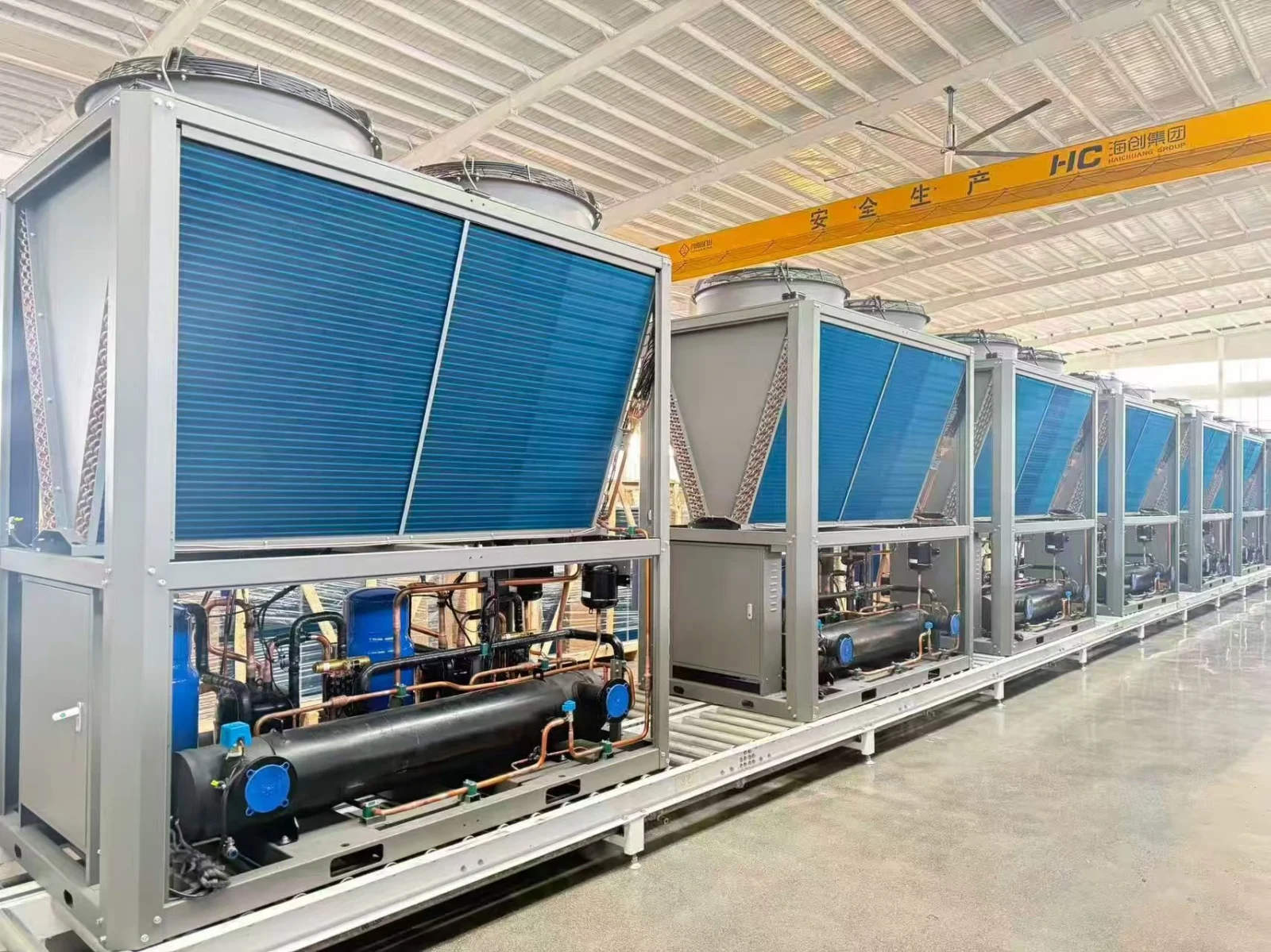
Compare an operating profile, not one headline number
Request power and net capacity at the high-ambient peak, typical summer conditions, intermediate load, minimum load and winter conditions when necessary. Include condenser fans and define the electrical boundary.
Build a defensible annual-energy estimate
Group the year into representative temperature and load bins. For each bin, use the selected unit’s cooling duty, power input and applicable hours. Add the bin kWh totals, and separately include external pumps and other plant auxiliaries if the intended comparison is whole-plant energy. Do not substitute an IPLV number directly into an annual electricity-bill calculation.
| Period | Required chiller data | Project hours |
|---|---|---|
| Peak summer | Net duty and input at peak ambient | Site-specific |
| Typical summer | Part-load capacity and input at typical ambient | Site-specific |
| Mild weather | Control/staging performance and input | Site-specific |
| Minimum-load operation | Minimum stable duty and cycling limits | Site-specific |
| Winter process duty, if applicable | Low-ambient capacity and controls | Site-specific |
Screw Compressor Control and Minimum Stable Capacity
Screw compressors can use different capacity-control arrangements, including slide-valve unloading, variable-speed control, multiple compressors and circuit staging. Their energy and minimum-load behavior differs by equipment. Variable speed is not automatically more efficient in every condition, and slide-valve unloading does not reduce power in direct proportion to capacity.
Minimum stable capacity can be as important as peak duty
Suppose the illustrative project peaks at 350 kW but often needs only 50 kW. A package with unsuitable minimum stable output may cycle, require different staging, or need additional fluid volume to maintain temperature stability. There is no universal minimum percentage that applies to all screw chiller models.
- Ask for the minimum stable duty at the relevant fluid and ambient conditions.
- Confirm the number of compressors and independent refrigeration circuits.
- Request the unloading method and part-load electrical input.
- Check minimum runtime, restart limits and anti-short-cycle controls.
- Verify the minimum system water volume and any buffer-tank requirement.
- Define operation when demand falls below minimum stable capacity.
Adequate fluid volume may stabilize water temperature and reduce cycling, but it cannot substitute for a suitable chiller load range and control strategy. Use the manufacturer’s actual minimum-volume requirement.
Do not choose by compressor type alone
Screw and scroll packages overlap in application. A multi-scroll package can be effective in a variable-load duty, while a screw configuration can be appropriate for another duty. Decide from complete package capacity, low-load control, efficiency and maintenance evidence, not a generic compressor ranking.
Electrical Supply, Starting and BMS Integration
Before ordering, confirm that the selected chiller matches the electrical supply and control requirements at the destination. Different markets may use different voltages, frequencies, electrical standards and power-distribution restrictions.
| Item | What to verify |
|---|---|
| Electrical supply | Rated voltage, phase, frequency and allowed tolerance |
| Electrical loading | Applicable running, maximum and starting-current information |
| Motor starting | Documented starting method and local supply compatibility |
| Packaged unit input | Which compressors, fans and integral auxiliaries are included |
| Protections | Isolation, earthing, overcurrent and interlocks per approved design |
| BMS interface | Protocol, hardware, points list, read/write permissions |
| Multi-chiller control | Lead/lag, capacity sharing, alarms and failover sequences |
Compressor-only motor input is not equivalent to full chiller input. The selected unit may also use condenser fans, controls and other integral electrical components. Ensure every supplier quotes the same input-power definition.
BMS compatibility requires a points list
“BACnet ready” or “Modbus supported” is not a complete integration statement. Request actual supported points, remote start/stop functions, setpoints, alarms, failure response, included interface hardware and commissioning responsibilities. The chiller’s local safety logic must remain coordinated with the approved project design.
For multi-equipment controls context, review SongXin’s integrated HVAC controls guide.
Installation, Condenser Airflow, Noise and Maintenance Access
The actual condenser inlet-air condition may differ from weather-station ambient when an air-cooled chiller is installed close to walls, roof parapets or other heat-rejecting equipment. Site layout, sound requirements, structural support and maintenance access need review before an order is released.
| Requirement | Review point |
|---|---|
| Condenser intake | Unobstructed fresh outdoor air access |
| Fan discharge | Avoid warm-air recirculation and overhead blockage |
| Adjacent units | Clearances and combined heat-rejection flow paths |
| Roof/foundation | Structural and seismic/wind requirements where applicable |
| Vibration | Appropriate isolation and pipe/electrical connection strategy |
| Sound | Specified power/pressure data and receiver locations |
| Maintenance | Access to coils, fans, compressor areas and control panels |
| Transport | Shipping dimensions, lifting points, weights and travel route |
| Hydronic system | Piping, strainers, drainage and freeze protection |
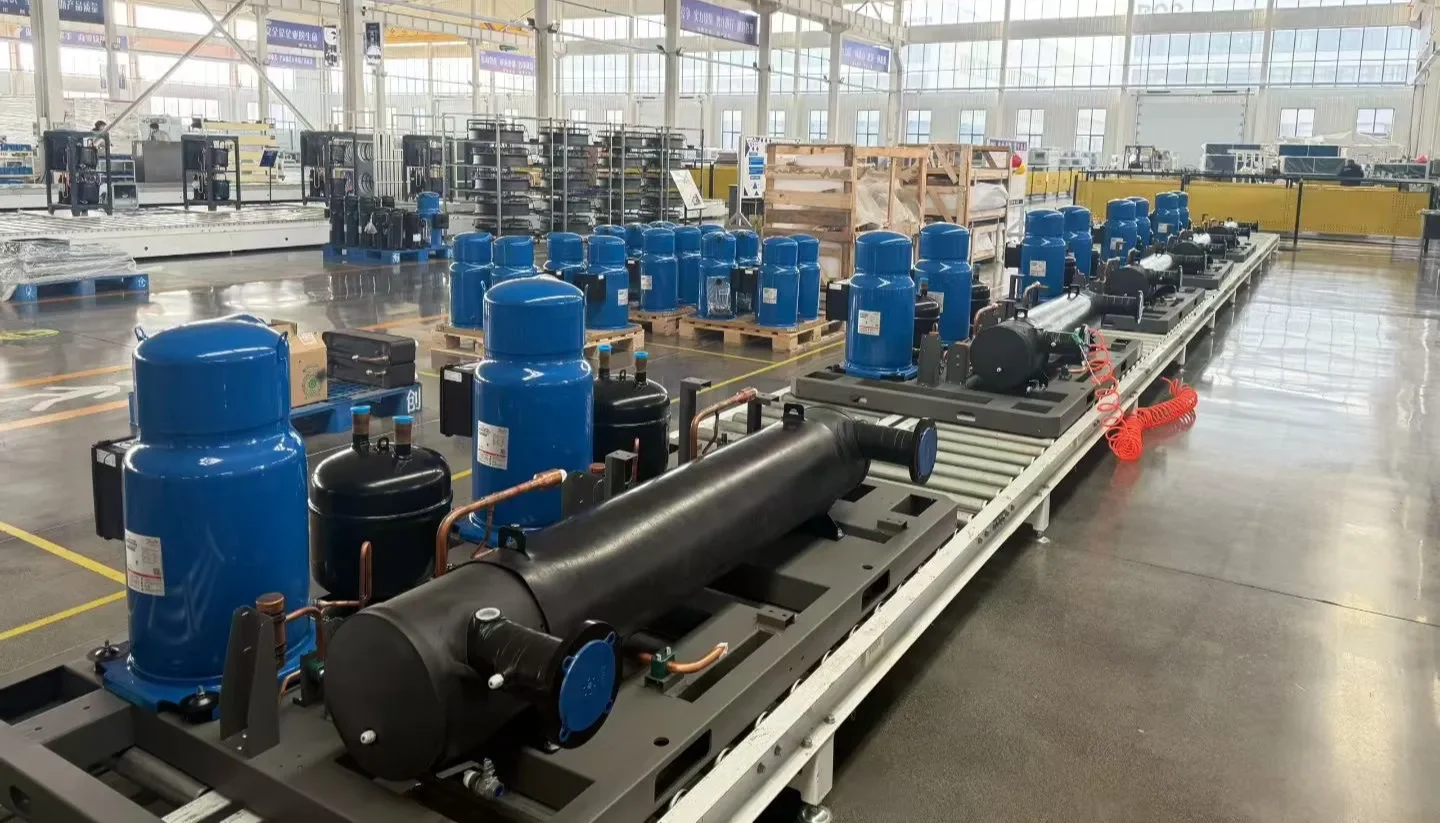
Sound power is not the same as installed sound pressure
Sound pressure at a neighboring building or occupied space depends on distance, reflections, barriers and other site factors. A single unexplained dB(A) claim is not sufficient. Request suitable sound data at the selected duty and assess it against the project acoustic limits.
Special environmental exposures
Dusty industrial surroundings can increase coil maintenance needs. Coastal or corrosive atmospheres may require suitable materials and protective treatments. Verify what the proposed configuration includes and what maintenance/warranty limitations apply; a generic “anti-corrosion” label is not evidence of suitability for every exposure.
Transport and lifting data
Request the final equipment dimensions, shipping weight, operating weight, lifting instructions, center-of-gravity information where required, and connection drawings. These should be approved before crane plans, roof openings and transport bookings are finalized.
Refrigerant Safety, Market Requirements and Rating Boundaries
The refrigerant affects equipment configuration, operating characteristics, servicing and environmental obligations. The proposed unit’s exact refrigerant and charge must be identified from manufacturer documentation, not inferred from a product family name or photograph.
ASHRAE Standard 34 classifications
ASHRAE Standard 34 defines refrigerant designations and safety classifications based on prescribed toxicity and flammability characteristics. A1 and A2L are different safety groups; A2L refrigerants should not be called nonflammable. The applicable refrigerant standards, codes and legal requirements depend on the location and equipment.
Standard references are not certifications
AHRI standard performance ratings, manufacturer technical selections, independent testing and third-party certification are distinct concepts. Do not claim AHRI, CE, EN or other certification for a SongXin model without valid model-specific evidence. Verify the required edition and standard scope for the tender and destination market.
Reliability, N+1 Redundancy and Maintenance Planning
Cooling continuity requirements differ between comfort cooling and production-critical operations. If a cooling interruption can stop a process or damage equipment, standby capacity and shared failure points need a project-level review.
Two chillers are not automatically N+1
Suppose the required net cooling duty is 350 kW. If two independent chillers can each deliver 350 kW at the specified design conditions, either may theoretically carry the full duty when the other is unavailable—provided the supporting systems are also adequate. If two units can each deliver only 200 kW, the combined 400 kW is not equivalent to full N+1 capacity redundancy for a 350 kW duty.
Assess pumps, power, control, valves, common piping, electric distribution and operating sequences. Multiple compressors or circuits inside one package do not automatically guarantee uninterrupted cooling.
Maintenance documents to request
- Model-specific inspection and preventive-maintenance schedule.
- Condenser coil and fan cleaning requirements.
- Compressor lubrication and refrigeration-circuit service recommendations.
- Evaporator and fluid-quality maintenance procedures.
- Controller, sensors and safety-device verification.
- Recommended critical spares, delivery lead times and qualified service support.
How to Compare Air-Cooled Screw Chiller Supplier Quotations
Buyer quotations are only comparable when each supplier is responding to the same project duty, system boundary and contract scope. A nominal capacity and package price can conceal differences in high-ambient performance, condenser airflow, evaporator duty, sound, electrical ratings and included accessories.
| Evaluation criterion | Supplier must submit | Acceptance question |
|---|---|---|
| Selected model | Exact configuration and selection reference | Is the offered model unambiguous? |
| Design-condition capacity | Net capacity at actual ambient and fluid conditions | Does it satisfy the required duty? |
| Electrical input | Full-package input at declared boundary | Are both figures comparable? |
| Part-load and minimum duty | Performance map, unloading/staging | Will the load profile be supported? |
| Evaporator | Flow, pressure drop and allowed operating range | Does it fit the hydraulic system? |
| Refrigerant | Type, charge, safety and documents | Does it fit the destination rules? |
| Acoustics and installation | Sound data, clearances, dimensions, weights | Can it be installed and maintained? |
| Controls | Points list, interlocks, included interfaces | Is the required sequence covered? |
| Testing and documents | Agreed acceptance and handover evidence | Can compliance with the contract be demonstrated? |
| Commercial terms | Delivery, warranty, freight and exclusions | Are costs and responsibilities complete? |
Five questions that reveal an incomplete proposal
- Is the capacity available at the actual ambient? Demand application-condition data, not just a nominal catalog line.
- Does reported electrical input cover the whole package? Clarify compressor, condenser fans and other included components.
- Is the minimum stable duty suitable? Peak-only capacity does not establish year-round control.
- Have flow and evaporator resistance been checked? Thermal duty alone does not prove hydraulic compatibility.
- Which controls, accessories, tests and documents are excluded? Require an itemized answer.
Use a deviation schedule
Mark each mandatory criterion as Compliant, Clarification required, Deviation or Not acceptable. A missing feature should never be silently accepted as compliant just because the supplier omitted it from a quote.
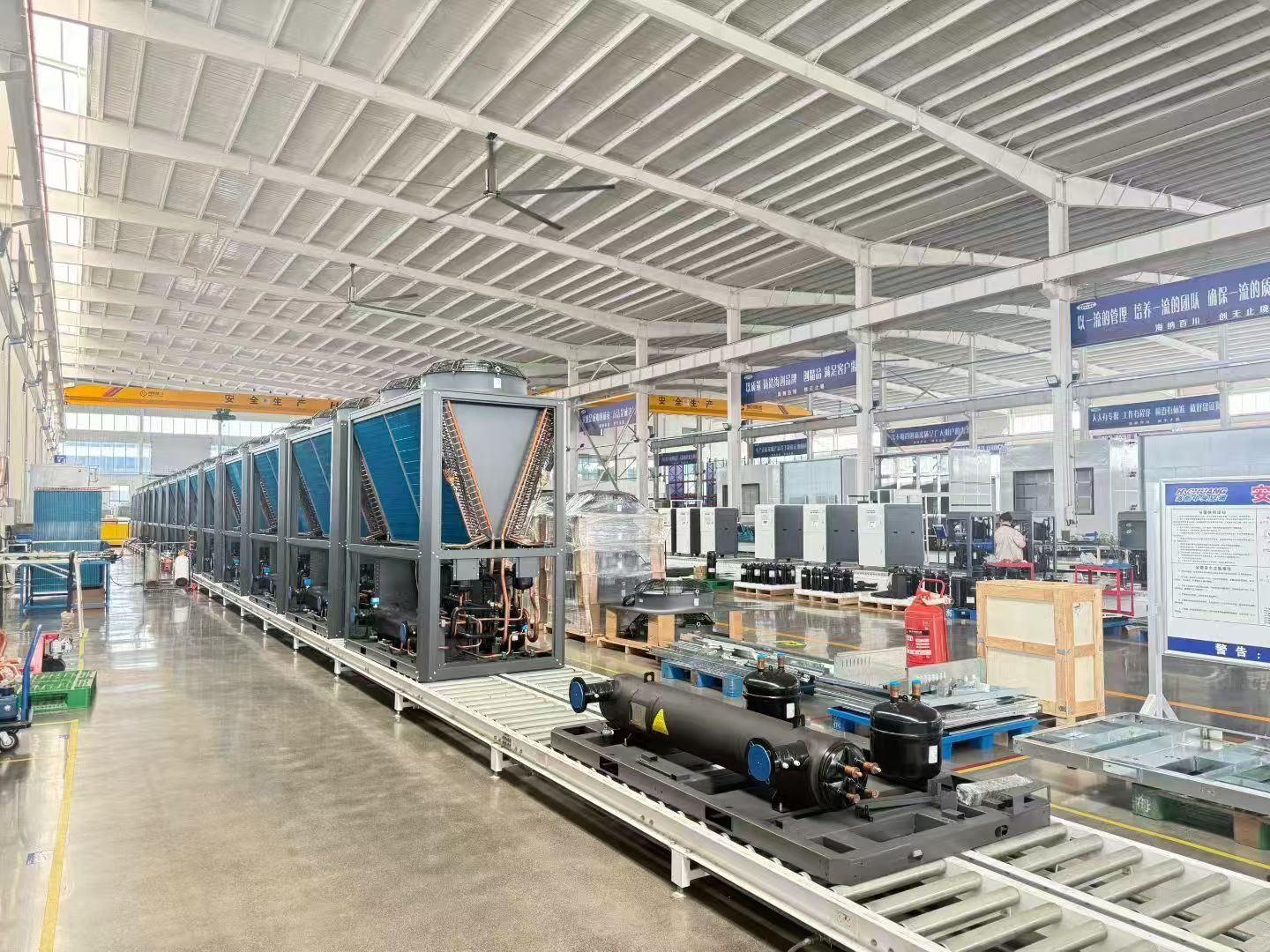
Technical proof before price negotiation
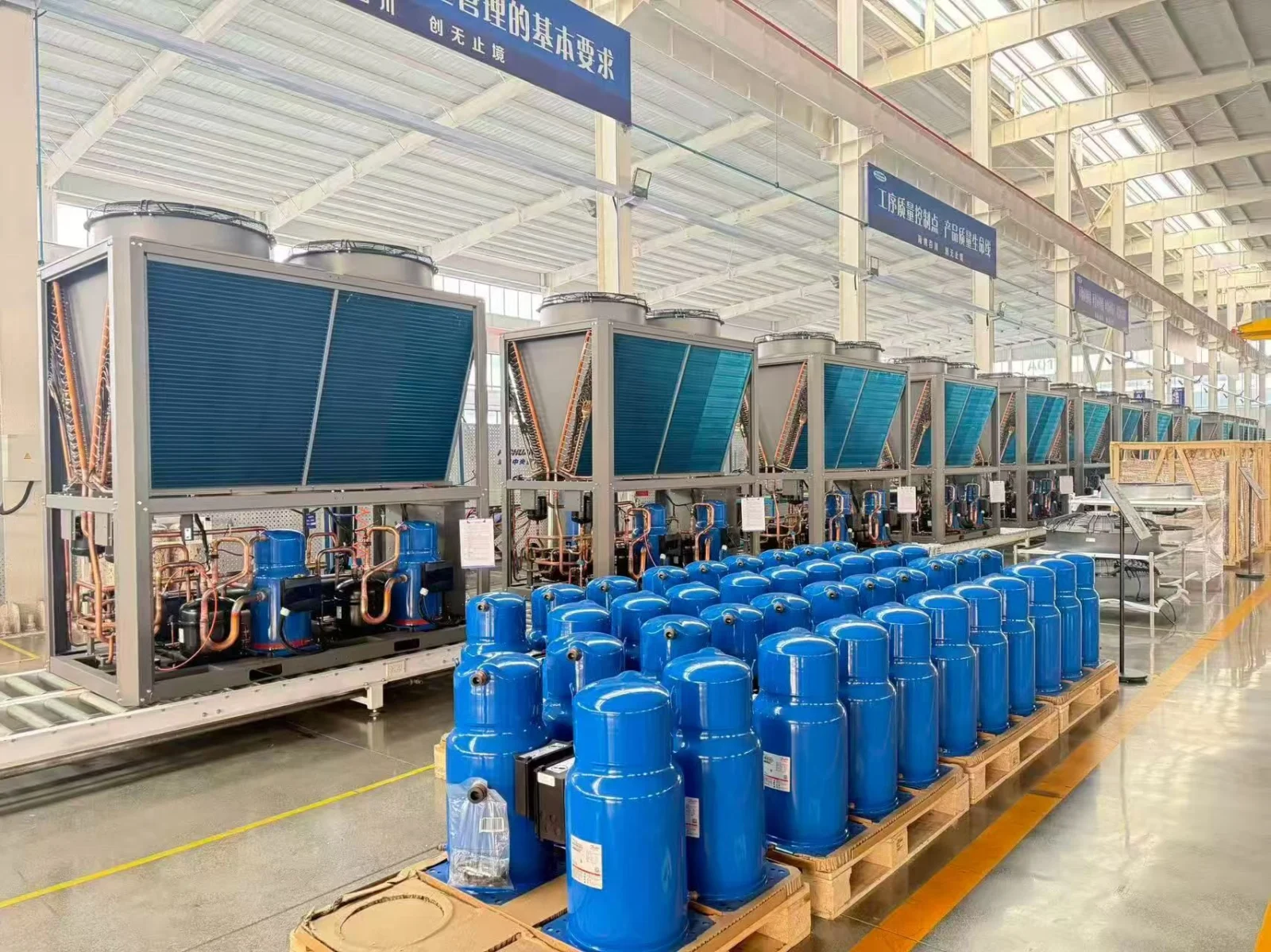
Request a consistent supplier schedule, model selection, drawings and a written list of deviations. A factory photograph shows equipment context, not proof of the quoted capacity or certification.
Comparing two screw chiller quotations?
Share the rated conditions and any selection sheets to identify where the designs or commercial boundaries differ.
Example: Buying for 350 kW at 42°C Outdoor Temperature
Use the illustrative 350 kW, 42°C design brief as a purchasing example. All figures below describe a hypothetical project; no actual SongXin model has been selected.
| Parameter | Preliminary project input |
|---|---|
| Required net cooling duty | 350 kW |
| Supply / return water temperatures | 7°C / 12°C |
| Water flow | Approx. 60.2 m³/h, subject to final design |
| Entering condenser air | 42°C |
| Cooling fluid | Water, pending approval |
| Site electricity | To be confirmed |
| Minimum and normal load | To be confirmed |
| Continuity requirement | To be confirmed |
| Installation location | Outdoor; clearances and access to be confirmed |
| Project destination and quantity | To be confirmed |
What is established—and what is not?
The preliminary flow calculation identifies a possible water-side design input. It does not establish evaporator suitability. The project still requires a supplier selection at 42°C condenser entering air and 7°C leaving water, plus the final electrical supply, low-load operation, sound limits and redundancy decisions.
The goal is not to buy something labeled “100 RT.” It is to approve a model shown to deliver the actual 350 kW duty under the agreed design conditions and with compatible plant interfaces.
What Determines Air-Cooled Screw Chiller Price?
There is no reliable universal price for an air-cooled screw chiller without a model, actual design conditions and clearly defined supply scope. Quotations can change with capacity, high-ambient condenser design, evaporator temperatures, compressor controls, acoustic requirements, refrigerant, electrical arrangement and technical documentation.
| Factor | Why it matters |
|---|---|
| Cooling duty and design ambient | May change condenser/compressor configuration |
| Fluid temperatures and flow | Affects evaporator and refrigeration selection |
| Efficiency and compressor control | May change motors, drives, circuits and controls |
| Refrigerant and compliance | Changes components, documents or market requirements |
| Acoustic and corrosion constraints | May require special materials or options |
| Site electricity and BMS | Changes electrical and control requirements |
| Testing and acceptance | Creates agreed verification work |
| Delivery and transport | Depends on shipment size, destination and commercial responsibilities |
FOB, CIF or FCA: specify the exact rule and place
Incoterms 2020 allocate specified delivery responsibilities, certain costs and risk between buyer and seller. FOB and CIF apply to sea or inland-waterway transportation; CIF involves seller-arranged freight and insurance to the named destination port while risk passes under the rule’s delivery provision. FCA can be used across transport modes and can be more appropriate for containerized machinery delivered to a carrier before vessel loading.
Always name the exact port/place and applicable Incoterms 2020 rule. Separately clarify import clearance, duties, inland haulage, cranes, installation, commissioning, controls and service. These are not automatically part of the machine price.
Purchase price is not lifecycle value
Compare electricity use with matched performance data and expected operating bins, plus maintenance, spares, site integration and service access. Do not claim a percent saving or payback duration without defensible project data and a clear system boundary.
Technical Approval, Factory Inspection and Shipment
Technical approval should precede final production release. A documented approval process avoids discrepancies between the proposed model, quoted accessories and what the project team expects on delivery.
Documents to review before ordering
- Selected model and configuration sheet.
- Rated/applicable performance at project ambient and chilled-water conditions.
- Full- and part-load electrical input, and minimum stable capacity.
- Evaporator flow and pressure-loss data.
- Refrigerant type, charge and safety documentation.
- Electrical and control schedules.
- Dimensioned general arrangement, service clearances and lifting data.
- Agreed factory testing/inspection and acceptance methods.
- Warranty, spare parts, installation and after-sales responsibilities.
Factory vs installed performance
A factory inspection does not automatically verify installed pumps, condenser-air circulation, pipework or site BMS operation. Commissioning acceptance must separately address the actual system where required by the contract. Establish the measurement boundary, test conditions and responsible parties before purchase.
Air-Cooled Screw Chiller RFQ Checklist for International Buyers
Use this checklist when contacting a potential air-cooled screw chiller manufacturer. An incomplete initial enquiry is acceptable if missing design information is marked To Be Confirmed (TBC) rather than guessed.
A. Project details
- Project name and project country/city
- Commercial HVAC or industrial process application
- New installation or replacement
- Quantity and desired delivery date
B. Cooling duty
- Required net duty in kW or RT
- Peak, typical and minimum load
- Operating hours and seasonal profile
- Required redundancy and expansion
C. Chilled-fluid circuit
- Leaving/entering fluid temperatures
- Flow and fluid type or glycol concentration
- Permitted evaporator pressure drop
- Minimum/maximum flow and temperature tolerance
D. Outdoor and site
- Summer design ambient and extreme ambient
- Minimum winter ambient if used year-round
- Altitude and installation configuration
- Dust, coastal exposure and condenser-air restrictions
E. Electrical and controls
- Voltage, phase and frequency
- Starting-current and site power constraints
- BMS points/protocol requirements
- Multi-chiller sequencing, alarms and safety expectations
F. Commercial and evidence
- Refrigerant or destination-market restrictions
- Acoustic and dimensional limits
- Required drawings, TDS and factory tests
- Named Incoterms place, warranty and spare-parts requirements
Ask the supplier to return
- Project-condition model selection with capacity and electrical input.
- Part-load and minimum-stable-capacity information.
- Flow limits, evaporator pressure drop and fluid compatibility.
- Refrigerant, electrical, sound and installation schedules.
- Controls, documentation, inspection and complete commercial scope.
Have an initial chiller schedule?
Send your available capacity, ambient temperature, fluid temperatures and project country. Unresolved engineering inputs can remain TBC for the first discussion.
Frequently Asked Questions About Air-Cooled Screw Chillers
Answers to common technical and buying questions. For complete project specifications, use the RFQ checklist in the preceding section and verify the selected model with the manufacturer.
What is the difference between an air-cooled screw chiller and a regular air-cooled chiller?
Air-cooled describes condenser heat rejection; screw identifies compressor technology. Air-cooled chillers can also use other compressor types. Confirm the actual proposed configuration.
Can a nominal 100 RT chiller provide 350 kW at 42°C?
Not automatically. Approximately 100 RT equals 352 kW, but the advertised nominal rating may be established at other ambient and fluid temperatures. Request the selected model’s net capacity at 42°C.
Is an air-cooled screw chiller suitable for industrial process cooling?
It may be, if the model meets duty, process-fluid temperatures, flow, load profile and operating envelope. Final suitability must be verified.
Is a screw chiller always more efficient than a scroll chiller?
No. Efficiency depends on compressor design, staging, operating points, ambient conditions and the full packaged unit. Compare selected performance rather than assuming one compressor type is superior.
Does an air-cooled screw chiller need a cooling tower?
A conventional air-cooled unit rejects condenser heat to ambient air and normally avoids a separate cooling-tower and condenser-water circuit. It typically still needs chilled-water or process-fluid circulation.
Is IPLV equal to my expected annual chiller efficiency?
No. IPLV is a standardized weighted part-load rating, not a direct annual-energy prediction for a particular site. Use representative load/weather bins and defined electrical boundaries.
Can the chiller use a glycol mixture?
Only when the selected model and evaporator are approved for the intended mixture and concentration. Water-based performance must not be assumed unchanged.
What is the correct air-cooled screw chiller price?
It depends on capacity at actual conditions, compressor controls, efficiency, refrigerant, electrical options, testing, freight and delivery scope. Request a detailed model-specific quotation rather than using an unsupported universal price range.
What should be checked before placing an order?
Confirm the exact model, project-condition capacity and power, fluid flow/pressure loss, refrigerant, electrical/control data, drawings, installation access, testing and contractual delivery responsibilities.
Can I request a quotation with incomplete specifications?
Yes. Send what is known and flag missing values as TBC. Final procurement approval still requires a complete enough and verified technical basis.
Request Air-Cooled Screw Chiller Data and a Technical Quotation
An air-cooled screw chiller should be selected as a complete cooling package at its actual operating point, not simply by nominal refrigeration tons, compressor technology or initial machine price.
- Confirm net capacity at actual outdoor ambient and leaving-fluid temperature.
- Review water flow, fluid properties, minimum load and power at representative points.
- Define refrigerant, electrical, installation, sound and maintenance requirements.
- Compare full equipment, testing, documentation and delivery scopes.
SongXin HVAC publishes Screw Chiller and Air-Cooled Chiller product information for commercial and industrial cooling enquiries. You can discuss whether an appropriate configuration is available for your project and which design data must be confirmed.
For the first discussion, send net cooling duty + design ambient + chilled-fluid temperatures + electrical supply + quantity + destination country. An existing equipment schedule can be used to identify missing information and request an appropriately specified quotation.
Request a project-specific chiller selection
Share your capacity, design ambient, chilled-water conditions, site electricity and quantity. Ask for available model data, a technical selection and scope clarification.
Ready to compare air-cooled screw chiller proposals?
Send capacity, entering condenser-air temperature, fluid supply/return conditions, electrical supply, quantity and project country. Identify unknown values as TBC and request the manufacturer selection at the agreed conditions.
- Application-condition capacity and power
- Minimum stable capacity and part-load data
- Equipment scope, drawings and documentation

Technical References & Engineering Notes
These sources support general rating, safety and procurement concepts. They do not prove test results, certification, market approval or capacity for any specific SongXin HVAC model.
- AHRI 550/590 (I-P) and 551/591 (SI): Water-Chilling Package Performance Ratings — Scope and standardized capacity and efficiency ratings for applicable packages.
- AHRI 551/591-2026 (SI): Official Standard — SI rating requirements; project-condition selections remain separate from certified ratings.
- AHRI Air-Cooled Water-Chilling Packages Certification Program — Program scope and certification framework, not proof for an unverified model.
- US Department of Energy: Purchasing Energy-Efficient Electric Chillers — Full-load, part-load and lifecycle cost procurement guidance.
- ASHRAE: Refrigerant Designations and Safety Classifications — Standard 34 classification context; verify current applicable edition and addenda.
- ICC Academy: FCA or FOB Under Incoterms 2020 — Transport and risk-allocation considerations for international machinery shipments.
Engineering note: Every numerical project calculation in this guide is illustrative. Confirm the actual chiller model, design-condition performance, refrigerant, safety documentation, quotation and delivery scope against the manufacturer’s current technical submissions.