CRAC vs CRAH: How to Choose a Cooling System for Your Server Room
Updated September 17, 2026.
Technical review: AI-assisted source and consistency assessment; project-specific engineering approval remains with the responsible designer.
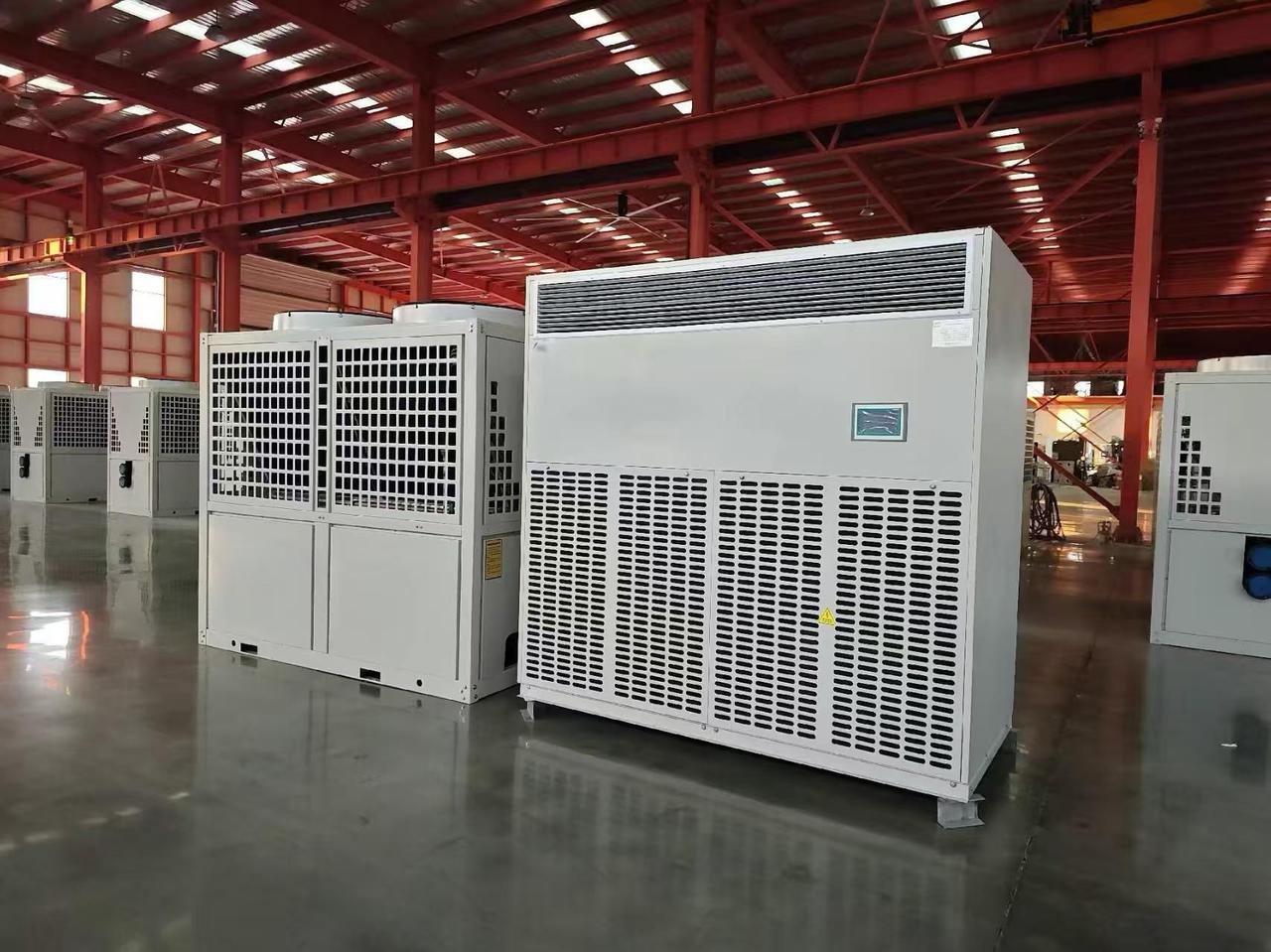
The main difference between a CRAC and a CRAH is the cooling source at the room unit. A conventional CRAC uses a direct-expansion refrigerant coil connected to a refrigeration circuit. A CRAH uses a chilled-water coil supplied by a chilled-water system. STULZ: CRAC and CRAH comparison.
For selection, follow the complete path that removes heat from the servers. A CRAH needs dependable chilled water at the specified conditions. A CRAC needs a suitable refrigeration and heat-rejection arrangement. Either proposal must also deliver air to the racks and operate as required during maintenance or a failure.
This guide helps facilities teams and project buyers choose the architecture and define a complete enquiry. It does not set a universal room-size or cooling-capacity threshold between the two options.
Compare the whole cooling chain
CRAC commonly stands for computer room air conditioner; CRAH stands for computer room air handler. In the usual distinction, the CRAC’s DX circuit provides refrigeration, while the CRAH transfers room heat to water cooled elsewhere. If a product combines functions, the selected model’s schematic takes precedence over its label. STULZ: system definitions.
| Examine dimension | DX CRAC proposal | Chilled-water CRAH proposal |
|---|---|---|
| Cooling medium at the room coil | Refrigerant. | Chilled water. |
| Cooling-source evidence | Refrigeration arrangement and capacity selection. | Chilled-water conditions and room-unit capacity selection. |
| Upstream equipment to identify | Condenser or other heat-rejection equipment, plus associated services. | Chiller or chilled-water source, pumps, pipework and associated controls. |
| Critical operating question | Could the complete refrigerant and heat-rejection system operate whenever the room needs cooling? | Could the water system deliver the required temperature and flow whenever the room needs cooling? |
| Maintenance question | Which components could be isolated while the required cooling continues? | Which room-unit and shared plant components could be isolated while the required cooling continues? |
| Basis for comparing energy | Power of the relevant cooling chain at the required duty. | Power of the relevant cooling chain at the same duty. |
Use the last five rows as a project decision framework. The answers depend on the proposed design, not the acronym.
A water-cooled CRAC is still a CRAC
Water in the heat-rejection system does not automatically make a unit a CRAH. STULZ’s CyberAir DX engineering manual lists air-, glycol- and water-cooled configurations within its DX product family. The distinction is where the refrigerant circuit and chilled-water coil perform their functions. STULZ: CyberAir DX engineering manual.
Ask for a simple schematic showing the room coil, refrigeration circuit where present, heat-rejection equipment and connecting services. This prevents an “independent CRAC” proposal from being accepted before the reviewer notices that it depends on a shared water loop.
First decision: is there a usable chilled-water source?
If the building already has chilled water, a CRAH is a candidate for evaluation. Existing plant alone is insufficient evidence. A chilled-water room unit must be selected for the water and air conditions the project will actually provide. Vertiv’s PEX3 CW product documentation describes operation from an existing building chiller and coordinated air- and water-flow control. Vertiv: Liebert PEX3 CW.
Request the following information from the plant owner before treating that source as available:
| Plant question | Evidence to obtain | Response if unresolved |
|---|---|---|
| Will it run during all required server-room hours? | Operating schedule and written service responsibility. | Keep continuous availability unconfirmed. |
| What water conditions will reach the room unit? | Supply and return temperatures, design flow and pressure basis. | Request a coordinated hydraulic and equipment selection. |
| Is capacity allocated to this room? | Load allocation including other connected consumers. | Do not rely on the chiller’s nameplate alone. |
| What happens during maintenance? | Isolation arrangement and specified operating sequence. | Identify the required alternative or outage procedure. |
| What happens after loss of power? | Plant and pump restart sequence, controls and power arrangements. | Examine the complete recovery sequence. |
| Who responds to a plant alarm? | Alarm routing and response responsibilities. | Assign an owner before operational handover. |
An office chiller that stops overnight should not be assumed to serve a continuously operating server room. The project might extend its operating arrangement, provide another cooling source or choose a different architecture. Compare those complete proposals, including their operating responsibilities.
If there is no usable chilled-water source, compare what it would take to create one before comparing a CRAH quotation with a CRAC quotation. A room-unit price does not include an unspecified central plant.
Second decision: does the heat reach the cooling equipment?
Cooling-source selection does not settle air distribution. Draw the rack arrangement, supply path and return path for either option. Include containment, obstructions, equipment access and the proposed location of temperature sensors.
A raised floor is not an inherent requirement of a CRAH. Vertiv describes chilled-water perimeter arrangements for slab-floor data centers, including front- and rear-discharge configurations. Its design discussion starts with server heat loads and airflow, room geometry and failure requirements. Select the air-delivery arrangement to match the room. Vertiv: chilled-water cooling for slab-floor data centers.
For tender assessment, ask the designer to identify the racks most difficult to serve in normal operation and in the required failure scenario. Then state how air distribution will be checked during commissioning. A total room capacity figure alone does not demonstrate an acceptable air path to every rack.
If the heat-load basis is incomplete, prepare it before requesting final equipment selection. SongXin’s server-room cooling load guide addresses that separate task. The comparison here assumes an agreed load schedule is available.
Third decision: what does redundancy include?
Describe the required outcome before counting spare units. For example: “The stated IT load must remain supported during the identified maintenance condition.” The designer then derives which equipment, distribution paths and controls are required to meet it.
Use this dependency assessment for both proposals:
| Component unavailable | Question for the CRAC design | Question for the CRAH design |
|---|---|---|
| One room cooling unit | Could the remaining units deliver the required duty and airflow? | Could the remaining units deliver the required duty and airflow? |
| One heat-rejection component | Which refrigeration circuits remain usable? | Which chilled-water production paths remain usable? |
| One pump or shared water section | Does this configuration depend on that water service? | What water flow remains available to the room? |
| One electrical supply | Which parts of the entire cooling chain retain power? | Which parts of the entire cooling chain retain power? |
| Control or communication fault | What local operation and alarm response remain? | What local operation and alarm response remain? |
A spare room unit does not, by itself, prove that a shared upstream failure is covered. Use the schematic to trace each claimed backup path from the room to final heat rejection.
Illustrative redundancy calculation
Suppose the required server-room duty is 120 kW and the proposal contains three room units rated at 60 kW each at the stated design conditions. With one unit unavailable, the remaining duty is 2 × 60 = 120 kW. The remaining room-unit capacity therefore equals the stated load with 0 kW spare margin in that condition. The action is to keep the proposal on hold until the designer also documents the required airflow and every upstream component needed by those two remaining units. These fictional values demonstrate the calculation and are not product ratings.
Where a proposal combines water cooling and DX backup, ask which conditions trigger the changeover, which components are shared, and what capacity remains in backup mode. Such combinations exist in manufacturer documentation, but their capabilities are model-specific. STULZ: CyberAir DX alternate-source configurations.
Compare energy and cost at the same boundary
Comparing a CRAH fan’s electrical input with a complete CRAC system’s input produces an incomplete result. Chilled-water cooling includes heat transport and cooling production outside the room unit. Vertiv’s chilled-water system description shows CRAHs connected to a chiller through supply and return water circuits. Vertiv: chilled-water cooling solutions.
For an energy comparison, ask the designer to define the equipment included in each calculation and the method for allocating shared plant energy. Use the same room duty, operating hours, climate assumptions and redundancy operating mode. Request part-load assumptions as well as the design-point result. Record any unavailable inputs instead of assigning an unsupported efficiency advantage.
For capital cost, compare room equipment, outdoor or central plant work, piping, electrical work, controls, access, commissioning and necessary modifications to the existing building. For operating responsibility, identify who maintains the room units and who maintains the upstream source. These boundaries should agree with the quotations and the proposed service arrangement.
Choose the architecture with a decision record
The following outcomes are useful at design assessment:
- Develop the CRAH option: the project has a documented chilled-water source with suitable operating conditions, availability and failure response. Proceed with room-unit, hydraulic and airflow selection.
- Develop the DX CRAC option: a suitable refrigeration and heat-rejection arrangement is feasible and covers the specified operating and maintenance scenarios. Proceed with the complete system selection.
- Compare both complete alternatives: both architectures are feasible. Compare their installed scope, energy model and operational responsibilities on the same basis.
- Hold final equipment selection: the source availability, load, air path or required failure scenario is unresolved. Assign that decision to the responsible designer or plant owner.
These are suggested decision outcomes. They do not assign an automatic winner by floor area or by a single capacity figure.
What to include in a server-room cooling enquiry
Send the room and rack layout, present and planned heat loads, operating hours, environmental requirements, cooling-source information, equipment locations and required maintenance or failure scenarios. Ask the supplier to return:
- A selected equipment schedule with stated air and source conditions.
- A schematic showing all external dependencies.
- Normal operation, alarm, restart and changeover sequences where applicable.
- Installation requirements and maintenance access drawings.
- An itemized scope with exclusions and commissioning responsibilities.
SongXin’s computer room air conditioner page provides a starting point for the equipment enquiry. If the earlier decision is whether ordinary comfort cooling suits the application, read precision AC vs comfort AC for server rooms. For a CRAC/CRAH project assessment, submit the source and load information with your request for a quotation.