Air Handling Unit (AHU) Selection Guide: Airflow, ESP, Cooling Coils & RFQ Checklist
A practical buying guide for HVAC contractors, MEP engineers and international project buyers. Specify the real fan duty, verify cooling-coil and filtration performance, and compare AHU quotations on an equal technical basis.
Jump to a section
AHU Selection Checklist: What Matters Most?
Choosing an air handling unit for a commercial or industrial project involves more than matching required airflow to a catalog. Two AHUs with the same nominal airflow can behave differently once connected to real ductwork, filtration, coils and controls. An undersized fan may fail to deliver design airflow; an unsuitable coil may miss humidity targets; an inaccessible casing may increase maintenance cost.
For HVAC contractors, MEP engineers, consultants, distributors and international equipment buyers, the objective is to establish a complete performance requirement and evaluate each proposal under the same technical conditions.
| Selection parameter | Buyer should specify | Supplier should demonstrate |
|---|---|---|
| Supply airflow | Required m³/h or CFM | Delivered flow at selected duty |
| Outdoor airflow | Project ventilation requirement | Outdoor-air and mixing arrangement |
| External static pressure | Duct-system resistance in Pa and rating boundary | Available ESP at selected airflow |
| Cooling / heating coils | Entering and leaving air / fluid conditions | Sensible and total capacities at those conditions |
| Filtration | Filter efficiency and replacement criterion | Filter type, sealing and pressure drops |
| Fan and acoustics | Operating range and noise limits | Fan curve, power and sound data |
| Casing, access and controls | Construction, space and BMS scope | Drawings, declarations and interfaces |
Explore available configurations on the SongXin HVAC Air Handling Unit product page.
Identify the AHU Application and Configuration
A conventional AHU may supply mixed return and outdoor air. A fresh air handling unit (FAHU) primarily conditions incoming ventilation air. A modular AHU uses sectional construction for configuration, delivery or access. A dedicated outdoor air system (DOAS) separately conditions outdoor air as part of an integrated HVAC strategy.
These descriptions refer to different design characteristics and can overlap. For example, a modular AHU may handle mixed air or outdoor air, depending on its configuration.
| Configuration | Primary function | Selection focus |
|---|---|---|
| Conventional AHU | Condition and distribute air through a ducted system | Mixed air, fan duty, heating/cooling coils |
| FAHU | Treat incoming ventilation air | Outdoor-air load, filtration, humidity |
| Modular AHU | Sectional equipment arrangement | Interfaces, leakage, access, lifting |
| DOAS | Separately treated outdoor air | Ventilation flow, moisture, zone coordination |
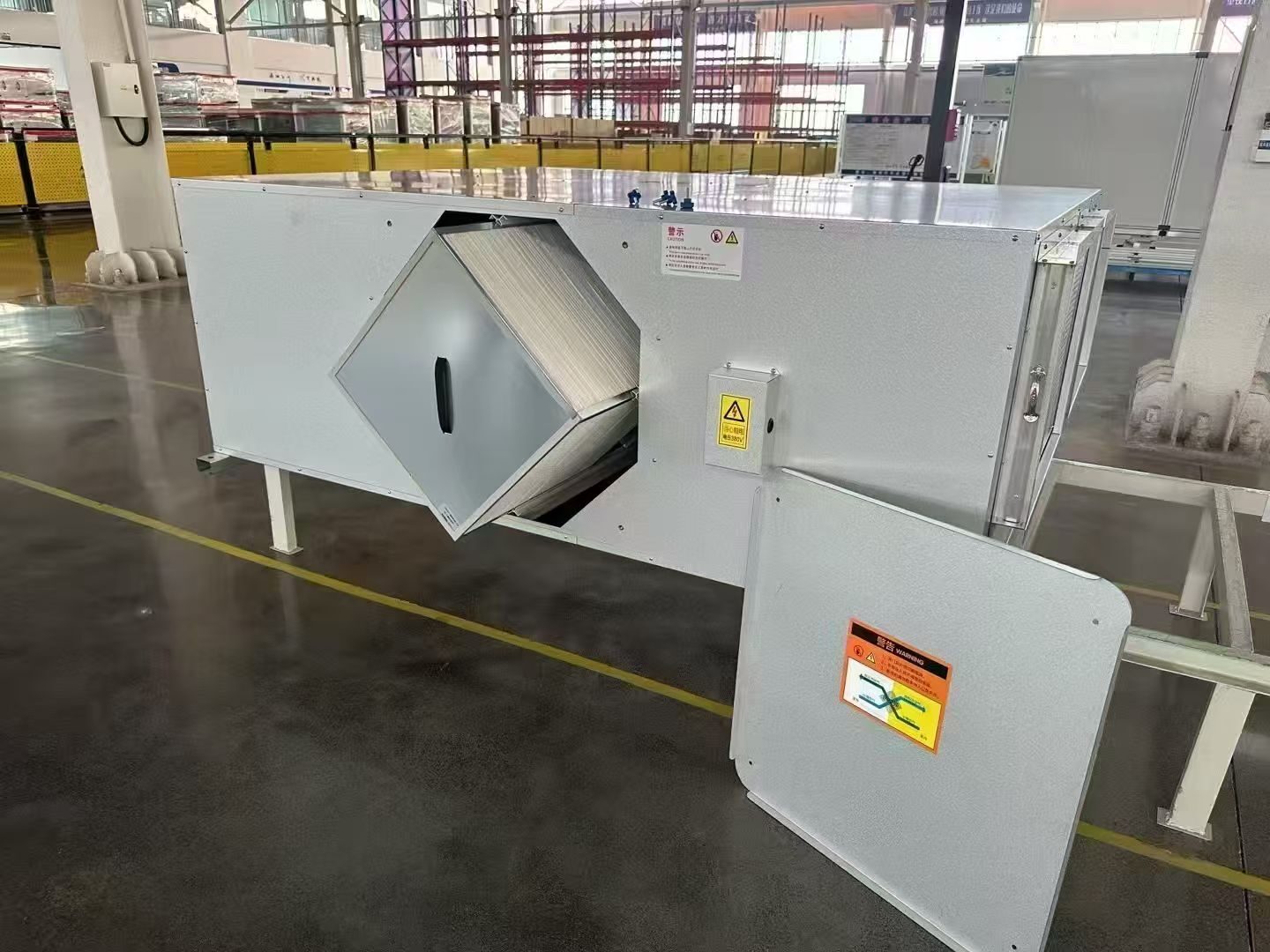
Fresh-air duties need a separate review
Outdoor-air percentage, local climate, moisture load and supply dew point can change coil and control requirements even when airflow looks similar.
Explore Fresh Air Handling Units →Define the design operating modes
- Summer peak cooling and high-humidity conditions.
- Winter heating and cold-start operation.
- Minimum outdoor-air ventilation, relief and return-air arrangements.
- Part-load airflow, economizer or free-cooling operation where required.
- Relevant shutdown, alarms and safety sequences.
Establish the building type, project location and elevation, occupancy, indoor targets, operating hours, site installation constraints and applicable ventilation, hygiene, fire and energy requirements before ordering. The relevant code and adopted edition depend on the project jurisdiction.
How to Calculate the Required AHU Airflow
Supply airflow is conditioned air delivered to spaces. Outdoor airflow is the outside air supplied to meet ventilation and other design requirements. Return airflow comes back from the served spaces; a portion may be recirculated and another portion relieved or exhausted.
In a mixed-air AHU, supply airflow can be much greater than outdoor airflow. Actual flow balance must account for return, relief, exhaust, leakage and the specified measurement boundaries. Ventilation quantity should be calculated by the responsible designer using the applicable rules; ANSI/ASHRAE 62.1-2025 is a relevant nonresidential reference in many markets.
Qsensible = ρ × cp × V̇ × ΔTQ in kW; density in kg/m³; specific heat in kJ/(kg·K); V̇ in m³/s; ΔT in K.Qsensible (kW) ≈ 0.000335 × V (m³/h) × ΔT (K)Approximate standard-air relation assuming ρ ≈ 1.2 kg/m³ and cp ≈ 1.005 kJ/(kg·K).Worked example: 12,000 m³/h
For a hypothetical room at 24°C with delivered supply air at 16°C: Q ≈ 0.000335 × 12,000 × 8 = 32.2 kW.
This figure is only an approximate space sensible-load cross-check. Coil duty may differ because of outdoor-air and latent loads, actual entering-coil conditions, fan heat, duct gains and system arrangement. Air-density corrections may be needed at altitude.
Why floor area and cooling capacity alone are insufficient
Offices, hotels, hospitals and factories with identical floor area may have different occupancy, contaminant sources, outdoor-air requirements, internal loads, humidity targets and operating schedules. Calculate supply airflow, outdoor airflow and any process/pressure requirements separately. For variable-air-volume systems, define the minimum and maximum operating range.
AHU External Static Pressure (ESP): Specify the Correct Fan Duty
External static pressure describes the available static pressure associated with the air system outside the AHU at defined equipment rating boundaries. It is not the same as maximum fan pressure or fan total pressure. The selected fan must deliver the specified air volume against the actual system resistance.
External losses can arise from duct lengths, fittings, terminal units, balancing dampers, external silencers, louvers or external filters. The designer should calculate resistance along the relevant critical air path rather than adding losses from unrelated parallel branches.
Illustrative supply-side pressure budget
| External component | Pressure loss |
|---|---|
| Supply ducts and fittings | 180 Pa |
| Critical terminal device | 110 Pa |
| Balancing damper | 40 Pa |
| External sound attenuator | 30 Pa |
| Supply-side subtotal | 360 Pa |
The 360 Pa is the illustrative resistance of this supply-side critical path, not a universal AHU ESP recommendation. The design must also account for the applicable outdoor-air, return and exhaust arrangements according to the fan configuration and agreed rating boundary.
Internal AHU losses cannot be counted twice
Cooling/heating coils, filters, heat recovery, internal dampers, silencers and transitions can create additional resistance. These internal losses belong in the manufacturer’s complete fan selection. If a configured AHU rating already states available ESP after its internal components, do not add those same losses again. If selecting a fan separately, use the correct fan static/total pressure definitions and equipment boundaries.
Request the fan curve, actual airflow and density, available ESP, internal component loss assumptions, fan speed, electrical input, motor and drive arrangement, noise data, filter loading basis and usable control range. AHRI 430/431 may be relevant within its applicable central-station AHU fan rating scope.
Filter loading matters: as dust accumulates, pressure resistance rises. The selected fan and control strategy should address the specified replacement-filter pressure condition, not only clean-filter operation.
AHU Cooling Coil Selection: Sensible, Total Capacity and Humidity
A cooling coil’s performance depends on its entering-air state, airflow, required leaving-air temperature and moisture condition, cooling-medium temperature and flow, heat-transfer design, and pressure losses. Identical nominal capacity values can conceal different operating conditions.
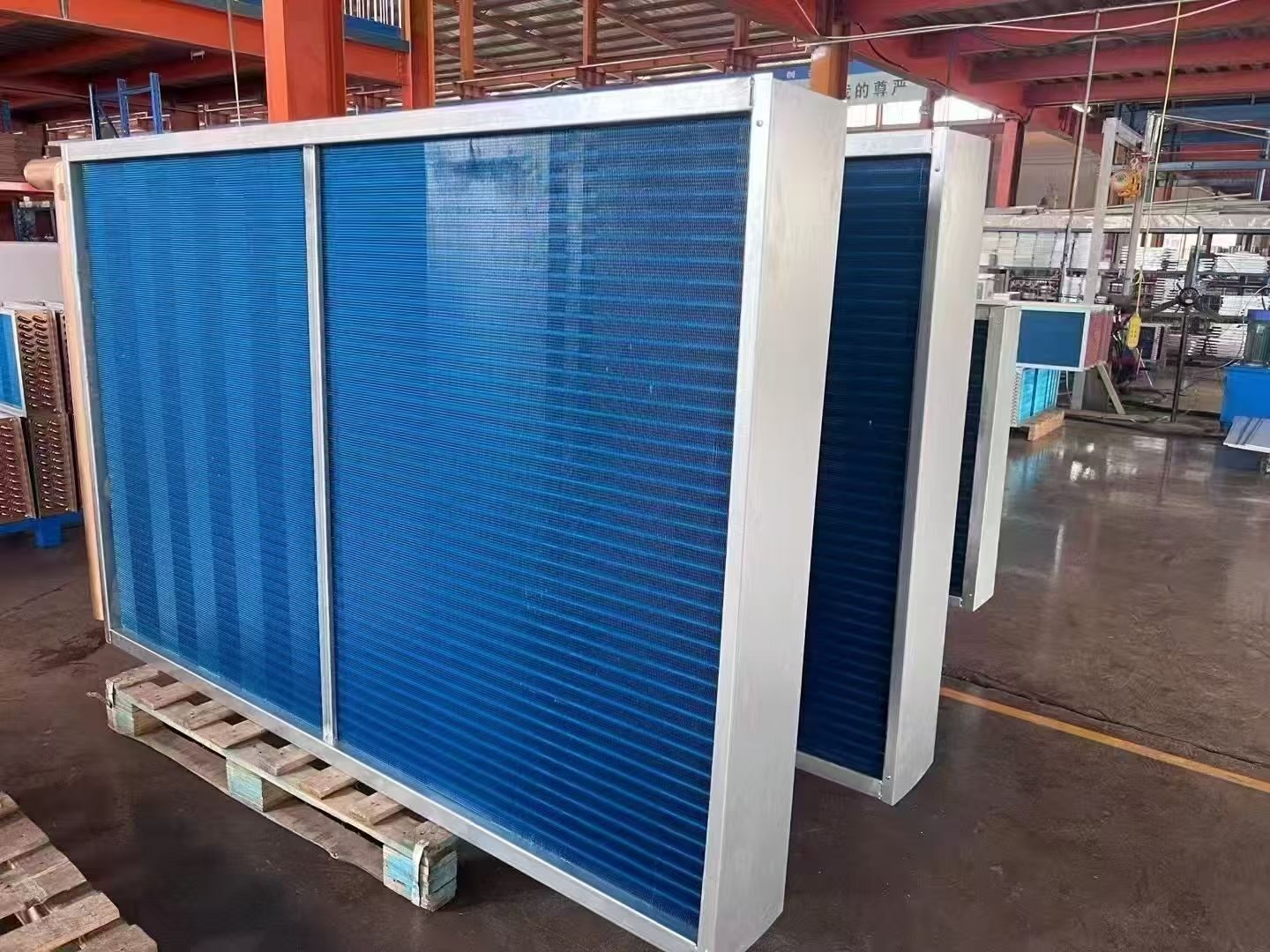
Determine the entering-coil condition
For a mixed-air AHU, determine entering-coil temperature and humidity using the outdoor/return-air mixing arrangement and any upstream heat recovery. A simplified adiabatic mixing calculation uses dry-air mass-flow proportions:
hmixed ≈ fOA × hOA + (1 − fOA) × hRAfOA is outdoor-air fraction on a dry-air mass-flow basis; enthalpy is kJ/kg dry air. Humidity ratio may be mass-weighted on the same basis. Real process analysis should include all relevant streams and heat transfer.When a coil’s surface is below the entering air dew point, moisture may condense. Total cooling then includes sensible and latent effects. An approximate moist-air energy balance is:
Qcoil ≈ ṁdry air × (hin − hout)Mass flow in kg dry air/s, enthalpy in kJ/kg dry air; detailed selections account for the specified thermodynamic and equipment conditions.Chilled-water conditions to specify
| Air side | Water side |
|---|---|
| Airflow and entering dry-bulb temperature | Entering chilled-water temperature |
| Entering wet-bulb / humidity ratio | Leaving temperature or design ΔT |
| Required leaving temperature and humidity | Required/available flow, fluid type |
| Total and sensible duty, air-side pressure drop | Allowable pressure drop, connection/design pressure |
Illustrative water-flow cross-check
Q (kW) ≈ 1.163 × water flow (m³/h) × ΔTwater (K)Uses approximate properties for liquid water in a typical chilled-water range; glycol mixtures need actual fluid properties.For a hypothetical 70 kW coil duty and 5 K water temperature rise: water flow ≈ 70 ÷ (1.163 × 5) = 12.0 m³/h. This is a water-side balance only. It does not prove that any specific coil achieves 70 kW at the stated air and water conditions; the manufacturer must verify performance with the correct model selection.
Condensate management and coil face velocity
For wet cooling coils, check face velocity, air-side resistance, coil area and condensate removal. Excessive velocity can contribute to moisture carryover. Drain pans need proper material, slope, accessibility and traps designed for the casing pressure. There is no single universal face-velocity limit appropriate for every coil.
For humid outdoor-air applications, review our Fresh Air Unit Dehumidification and Supply Dew-Point Guide.
AHU Filter Selection: Efficiency, Pressure Drop and Maintenance
Filtration requirements depend on building use, outdoor air quality and project specifications. General-ventilation filter classification should not be confused with specialized filtration for cleanrooms or critical healthcare applications.
| Standard | What it addresses | Procurement note |
|---|---|---|
| ISO 16890 | General-ventilation particulate matter removal (ePM1, ePM2.5, ePM10) | Request the class, rated flow and test documentation. |
| ASHRAE 52.2 / MERV | Particle-size removal efficiency rating | Request the actual MERV test classification. |
| Specialist filtration | Higher-grade or process-specific filter performance | Apply the relevant specialist requirements; do not presume general-ventilation equivalence. |
ISO ePM and MERV classifications are not directly interchangeable through a universally exact conversion. Where buyers and suppliers use different frameworks, request relevant supporting data.
A filter may meet its lab rating while incorrect installation permits bypass around its frame. Filter efficiency, pressure resistance, sealing and maintenance must be reviewed together. Upgrading a filter without reassessing fan duty can change the delivered airflow or energy use.
Fan Power, Acoustic Performance and Lifecycle Cost
The motor nameplate power is not the same as the AHU’s actual electrical input at its design operating point. Ask for fan-system input under the specified airflow, pressure, density and component arrangement. Include expected part-load operation when comparing lifecycle energy.
Pair (W) = airflow (m³/s) × fan total-pressure rise (Pa)This is aerodynamic air power. Electrical input is higher because of fan, motor and drive losses. AHU available ESP alone must not be substituted for fan total-pressure rise.Illustrative fan-energy comparison
| Parameter | Proposal A | Proposal B |
|---|---|---|
| Fan electrical input | 6 kW | 8 kW |
| Operating time | 4,000 h/year | 4,000 h/year |
| Calculated electricity | 24,000 kWh/year | 32,000 kWh/year |
| Illustrative difference | 8,000 kWh/year | |
The figures illustrate a calculation only. Actual annual consumption depends on control sequences, airflow variation, fan pressure, filter loading and operating hours. Use consistent assumptions when comparing supplier options.
Acoustic requirements
Acoustic specifications should distinguish in-duct sound power, casing-radiated sound, vibration and site sound-pressure limits. A lone dB(A) number without a measurement location, operating condition or rating basis is insufficient for detailed acoustic evaluation. Request octave-band data when required by the project design.
Sound attenuators may reduce transmitted noise but can also increase airflow resistance. Their location and inclusion must be clear in both pressure calculations and quotation scope.
AHU Casing Construction, Leakage and Installation Access
Even a correctly selected fan and coil may be undermined by excessive casing leakage, unsuitable insulation, thermal bridging, poor condensate drainage or difficult maintenance access. Vague terms such as “double-skin insulated casing” are not a substitute for the measurable requirements in the equipment schedule.
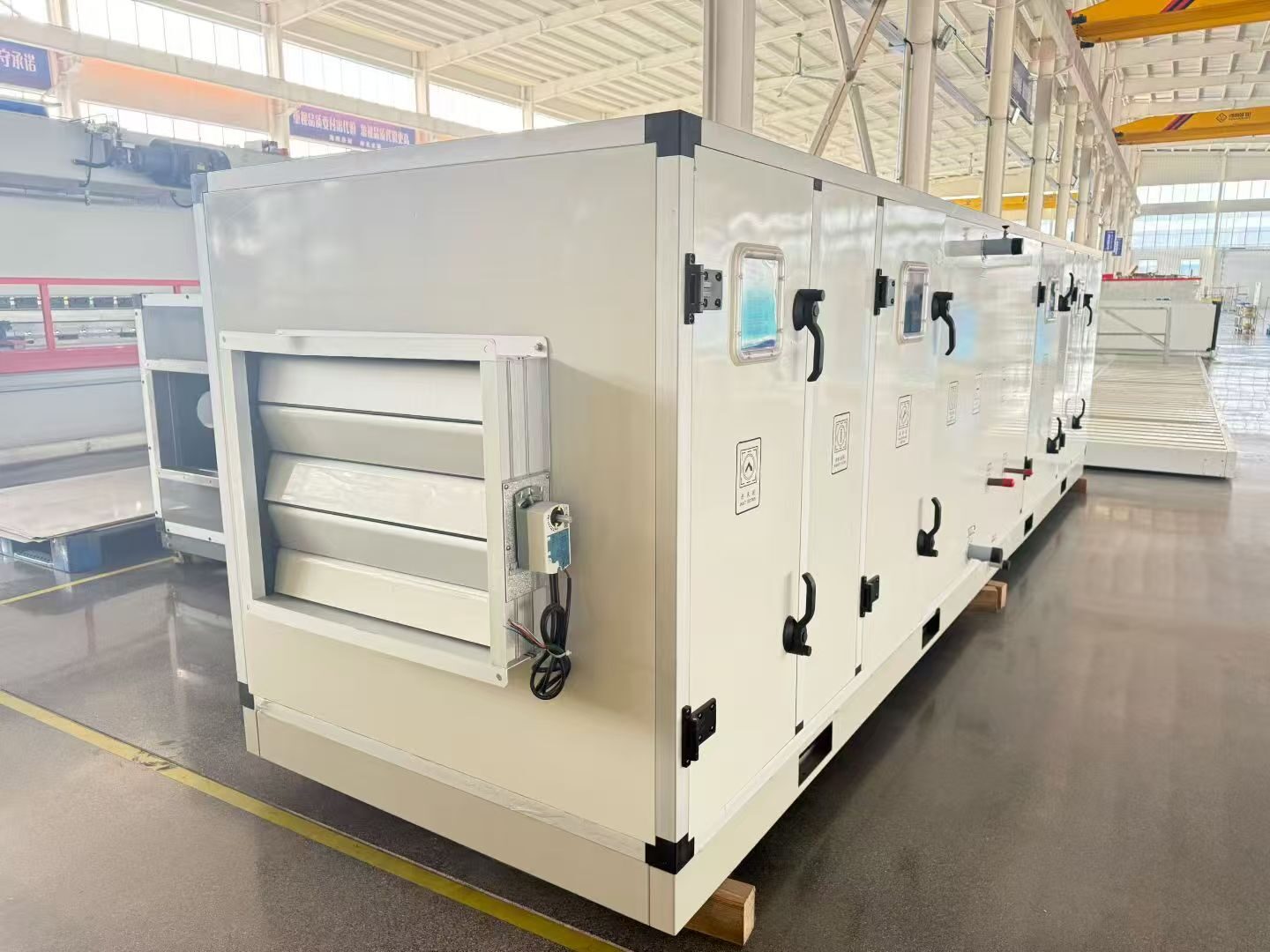
Design for delivery and service
Review shipping sections, lifting, access paths, fan/coil removal and service clearance before approving drawings.
Read modular AHU access guidance →| Characteristic | Why it matters |
|---|---|
| Mechanical strength | Resistance to deformation under design pressure. |
| Casing / filter leakage | Air delivery efficiency and filtration integrity. |
| Thermal performance | Heat transfer and condensation risk. |
| Drainage and corrosion | Reliable moisture management and durability. |
| Maintenance access | Filter, coil, fan, motor and controls serviceability. |
| Shipping dimensions | Transport route, lifts, corridors and on-site assembly. |
Relevant European technical frameworks include EN 1886:2007 (mechanical performance) and EN 13053:2019 (ratings and performance). Quoting a standard does not establish that a particular SongXin product has been independently certified or tested. Request model-specific documentation where required by the contract.
Before approving the general arrangement drawing
- Confirm installed length, width and height, plus the largest shipping section and its mass.
- Check doors, corridors, stairs, lifts, roof access and handling equipment.
- Reserve clearance for filters, coil withdrawal, fan/motor service and electrical panels.
- Coordinate chilled-water connections, condensate traps and duct interfaces.
- Agree how sectional joints and post-assembly integrity will be inspected.
AHU Controls and Building Management System Integration
AHU controls should be defined during procurement, not left entirely to commissioning. Depending on application, functions may include supply-temperature control, fan airflow or duct-pressure regulation, outdoor/return-air damper sequencing, heating/cooling valve control, humidity monitoring, filter differential-pressure alarms, freeze protection and scheduled operation.
| Control question | Specification needed |
|---|---|
| Who controls the fan? | Local controller, drive and BMS responsibility. |
| How is temperature controlled? | Sensor placement, valve sequence and setpoint limits. |
| How is outdoor air managed? | Damper arrangement, minimum ventilation and modes. |
| What happens on faults? | Approved alarms, safe shutdown and fallback behavior. |
| What does the BMS receive? | Actual point list, read/write authority and trends. |
Stating that a controller supports BACnet or Modbus does not by itself prove full integration. Require the actual points list, supported commands, communication responsibilities, sequence of operations and relevant tests. Fire/smoke, freeze and other safety functions must follow approved design and applicable codes.
See our Integrated HVAC Controls and BMS Specification Guide for coordination with chillers, heat pumps and VRF systems.
AHU Requirements for Different Buildings and Industries
AHU selection must reflect the required indoor environment, operating schedule and applicable processes. The same airflow does not establish suitability for an office, hospital, factory or technical facility.
| Application | Important selection considerations |
|---|---|
| Offices / commercial | Ventilation, acoustics, part-load energy, operating schedules. |
| Hotels / hospitality | Humidity, comfort, noise and maintenance access. |
| Healthcare | Hygiene, filtration, pressure relationships, specialist regulations. |
| Manufacturing | Process contaminants, corrosion, operating hours and maintenance. |
| Cleanrooms / electronics | Particle control, humidity, pressure and validation. |
| Schools / public buildings | Occupancy variation, ventilation and noise control. |
| Data centers / technical rooms | Sensible cooling, airflow paths and operating continuity. |
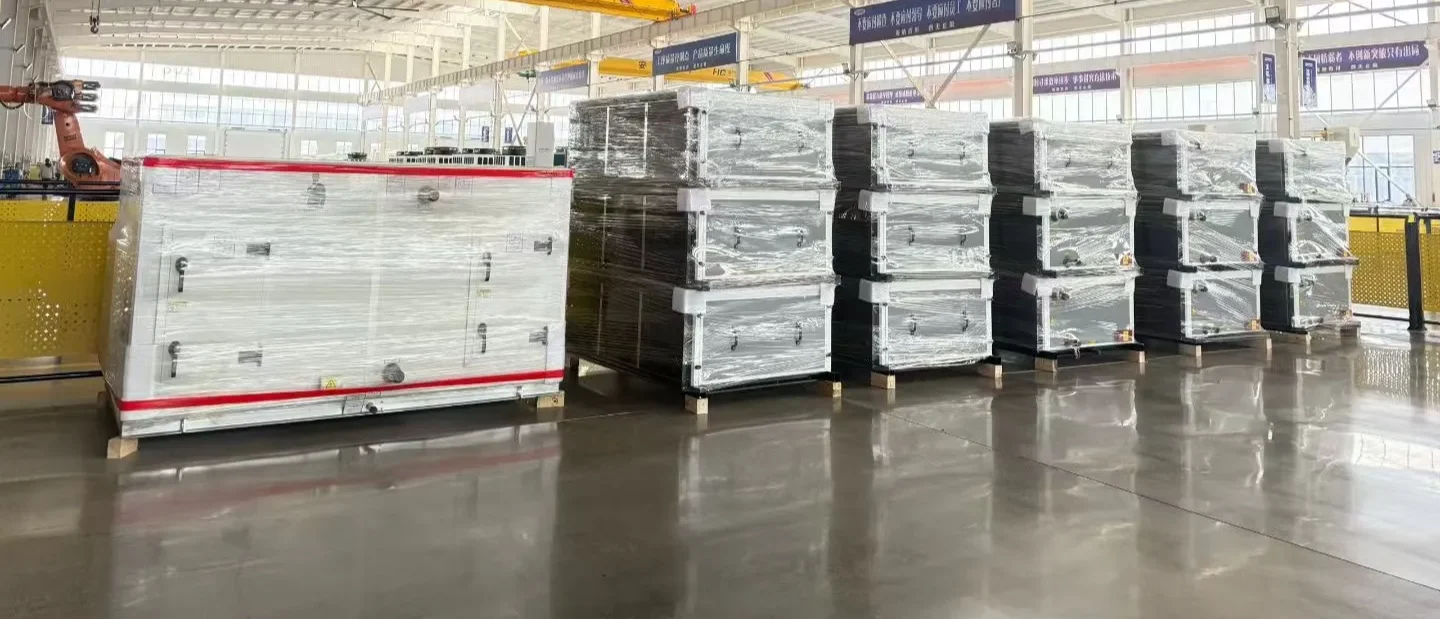
Hot and humid climates
Large outdoor-air moisture loads can require defined supply dew point, greater latent duty, reheat or specific control strategies. A nominal total cooling-capacity claim does not alone establish the required dehumidification result.
Industrial facilities
Dust, fumes, continuous operation or corrosive surroundings may require special filtration, casing materials and service strategies. The procurement specification should identify those needs rather than assume standard commercial construction is sufficient.
Healthcare and cleanrooms
These applications may require specialist filtration, hygiene, air-pressure relationships, materials and verification. A general-purpose AHU must not be represented as hospital-grade or cleanroom-suitable without appropriate engineering review and evidence.
For commercial project context, see Commercial Building HVAC Solutions.
Worked AHU Selection Example: From Design Brief to Supplier Review
Consider a hypothetical commercial building that requires a mixed-air AHU. Airflow and preliminary supply-side pressure data are available, but the final coil and controls information is still under coordination.
| Parameter | Preliminary requirement |
|---|---|
| Application | Commercial mixed-air AHU |
| Supply airflow | 12,000 m³/h |
| Supply-side external resistance | 360 Pa, from hypothetical critical path |
| Room / delivered supply temperature | 24°C / 16°C |
| Estimated space sensible duty | Approximately 32.2 kW |
| Outdoor air / entering-coil state | To be confirmed from ventilation and mixing calculations |
| Total coil duty / chilled-water design | To be confirmed |
| Filtration / sound / controls | To be confirmed by project specifications |
| Power and dimensions | Project-specific; awaiting selection |
What is known—and what remains unresolved?
The 32.2 kW value is only the assumed room-to-supply sensible heat cross-check. It is not a cooling-coil selection. The 360 Pa is only the simplified external supply-path resistance. Fan input cannot be determined from that value alone; final coil duty cannot be established without mixed-air humidity and cooling-medium conditions.
This staged approach avoids turning an incomplete estimate into a final purchase specification.
How to Compare AHU Supplier Quotations
Buyers often receive quotations that differ in fan selection, coil duties, filtration, control scope and included accessories. Comparing price or nominal airflow alone can result in an incorrect purchasing decision. Request clarification of deviations so that the final comparison uses consistent performance and delivery requirements.
| Evaluation item | Compare | Warning sign |
|---|---|---|
| Supply airflow | Same selected flow and operating point | Nominal flow only |
| ESP | Same external pressure/rating boundary | Missing or inconsistent pressure basis |
| Fan | Curve, input power, control range | Only motor nameplate kW |
| Coil | Same entering air and fluid conditions | Unqualified catalog nominal capacity |
| Filters | Efficiency, loading and seals | Grade given without pressure data |
| Acoustics | Sound data at specified duty | Unqualified dB(A) figure |
| Casing and access | Construction, size, declarations | Generic performance claims |
| Controls | Points, devices, sequences and exclusions | “BMS ready” without scope |
| Delivery | Packing, lead time, named Incoterms place | Unclear inclusions and exclusions |
Five questions to ask before choosing a supplier
- Is the specified airflow available at the agreed ESP? The fan point matters more than an isolated catalog airflow.
- Have internal losses been included exactly once? Check coils, filters and any internal accessories.
- Were both coils rated at identical air and water conditions? Different test points prevent a fair capacity comparison.
- What is included in the offered filter and controls scope? Check options, exclusions and interfaces.
- Will installation, service and delivery work as planned? Review shipping sections, approved drawings and documentation.
Initial purchase price is only one part of equipment value. Compare fan power, maintenance, documentation and service access, but do not rely on unverified percentage savings.
Comparing two AHU quotations?
Send the schedules and your project operating conditions for a technical discussion of configuration and missing data.
AHU RFQ Checklist for International B2B Buyers
A complete technical brief improves the usefulness of preliminary quotations. You do not need to invent engineering values when drawings are incomplete. Mark missing conditions as To Be Confirmed (TBC), then resolve them before final approval.
A. Project information
- Project name and country/city:
- Building application and installation location:
- New installation or replacement:
- AHU quantity and project stage:
- Target delivery schedule:
- Site climate and elevation:
B. Airflow and pressure
- Supply airflow (m³/h or CFM):
- Outdoor airflow and return-air configuration:
- Required available ESP (Pa):
- ESP rating/measurement boundary:
- Variable-flow operation and hours:
- Critical external accessories:
C. Cooling and heating conditions
- Entering-air dry-bulb and humidity:
- Required leaving-air condition:
- Cooling medium and fluid composition:
- Entering/leaving water temperatures:
- Water flow and allowable pressure loss:
- Total/sensible coil duty and heating load:
- Required humidity or dew point:
D. Filters and construction
- Filter classification and final resistance:
- Casing leakage, thermal and corrosion criteria:
- Hygiene and condensate requirements:
- Acoustic and vibration limits:
- Maximum installed and shipping sizes:
- Transport and maintenance clearances:
E. Electrical and controls
- Voltage, phase and frequency:
- Fan control and operating range:
- Local control functions:
- BMS protocol, points and write authority:
- Required alarms and safety interfaces:
- Relevant commissioning requirements:
F. Commercial and documentation
- Quotation currency and quantity:
- Delivery port or destination:
- Requested Incoterms rule and named place:
- Selection sheets and drawings:
- Inspection/acceptance requirements:
- Warranty and spare parts requirements:
Have your AHU schedule ready?
Send the airflow, ESP, coil design conditions, quantity and country. Missing values can be marked TBC during initial discussions.
Documents to Review Before Manufacturing and Shipment
Once a supplier has issued a technical offer, verify the agreed scope before authorizing production. A product brochure does not replace a project-specific technical selection or approved general arrangement drawing.
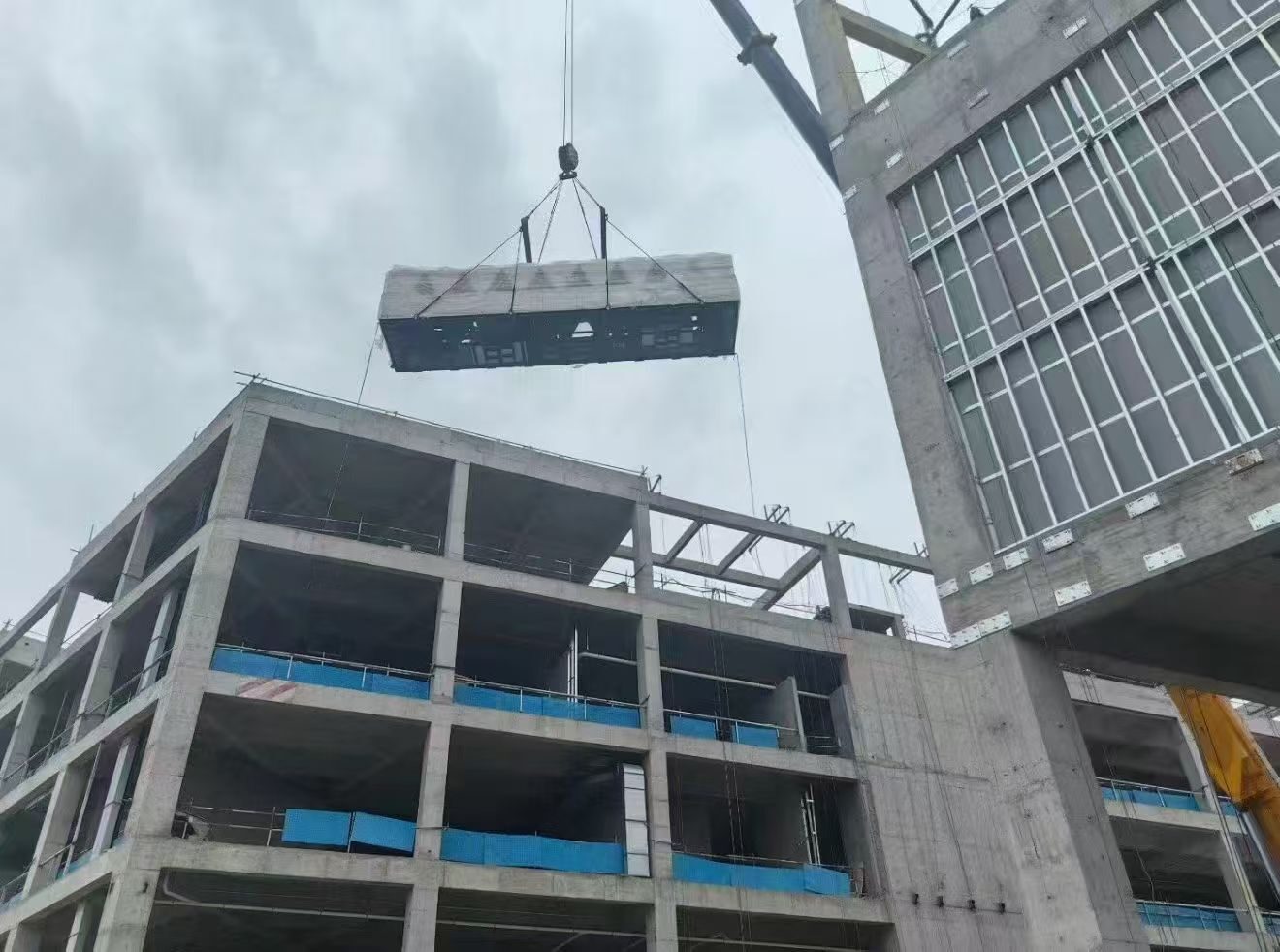
Factory inspection is not automatically equivalent to complete installed-system performance testing. Define what evidence will be provided at each stage and which party is responsible for ductwork, piping, wiring, system balancing, controls and acceptance.
When an AHU uses sectional construction, inspect assembly interfaces and service access. Our Modular AHU Replacement Guide offers a related installation and handover checklist.
Frequently Asked Questions About AHU Selection
How do I determine the correct AHU size?
Calculate required supply and outdoor airflow, cooling and heating demands, operating conditions and system resistance. Then verify fan performance, coil selection, filters, casing and installation dimensions. Physical size is the result of the engineering selection.
What is a typical AHU external static pressure?
There is no universal ESP for all AHUs. The required value depends on the real duct and terminal network, external accessories, airflow and agreed rating boundaries. Use a project pressure-loss calculation.
Is AHU supply airflow the same as fresh airflow?
No. A mixed-air AHU may recirculate return air and introduce a smaller outdoor-air stream. A dedicated outdoor-air unit primarily handles ventilation air. Both flows must be specified separately.
Can an AHU be selected from cooling capacity alone?
No. Cooling duty alone does not establish fan pressure, airflow, ventilation, filtration or acoustic performance. Coil capacity also depends on actual entering-air and cooling-medium conditions.
What is the difference between sensible and total cooling capacity?
Sensible capacity relates to temperature reduction; total capacity includes latent cooling when moisture is removed. Specify entering and leaving air states where dehumidification matters.
How should an AHU fan be selected?
Select for the required airflow at the actual operating pressure, including internal component losses and the correctly defined external pressure. Review the fan curve, energy input, air-density assumptions, filter loading and control range.
Does a higher-efficiency filter always improve AHU performance?
Higher particle-removal efficiency may improve filtration, but the filter also must fit the application and be correctly installed. Check fan capacity, pressure loss, seals and maintenance requirements.
How do I compare AHU quotations from different suppliers?
Normalize airflow, ESP, coil conditions, filtration, electrical input, casing and controls scope, technical documents and commercial terms. Resolve deviations in writing before comparing prices.
Can I request a quotation with incomplete engineering drawings?
Yes. For an initial discussion, share available data and mark unresolved items TBC. Final selection and order approval should use sufficiently defined and verified requirements.
What should I send for an international AHU RFQ?
Provide application, country, quantity, required airflow, ESP, known air/water conditions, electrical supply, constraints and expected delivery schedule. Add the full equipment schedule when available.
Request AHU Technical Selection and a Project Quotation
A successful procurement process begins with a clear design brief. Airflow, external static pressure, coil conditions, filtration, controls, electrical compatibility and installation constraints must work together as one system.
SongXin HVAC offers Air Handling Units and related Air-Side Equipment for commercial and industrial HVAC applications. You can contact the team with the engineering information already available to discuss possible configurations, technical documents and quotation scope; any preliminary proposal remains subject to final engineering and commercial confirmation.
Make the next AHU quotation more accurate.
Share your available AHU equipment schedule with the SongXin HVAC team. A useful first message includes:
- Project country, application and quantity.
- Supply airflow and required ESP.
- Entering/leaving air and water conditions, if known.
- Electrical supply, installation limits and delivery schedule.
No website form required. Incomplete engineering values may be marked TBC for initial discussions.
Technical References & Engineering Note
These resources provide relevant specification and rating frameworks. Applicability depends on the equipment, jurisdiction and adopted edition. Mentioning a standard does not prove testing, certification or compliance for a particular SongXin model.
- ANSI/ASHRAE Standard 62.1-2025 — ventilation and acceptable indoor air quality.
- ISO 16890-1:2016 — general-ventilation filter particulate matter efficiency classification.
- ASHRAE Standard 52.2-2025 — particulate removal efficiency and MERV reporting.
- AHRI 430/431 — performance rating of central-station AHU supply fans within scope.
- AHRI 410 — applicable heating and cooling coil performance ratings.
- Eurovent AHU technical overview — EN 1886:2007 and EN 13053:2019 performance evaluation context.
Engineering note: Numeric calculations in this guide are illustrative, not SongXin HVAC product ratings or certified performance. Final AHU selection requires validated project design conditions and appropriately verified model-specific performance data.