Comfort · ventilation · reliable campus operation
Education HVAC Solutions for Comfortable Learning Environments and Reliable Campus Operation
SongXin HVAC provides education HVAC solutions designed for schools, campuses, training centers, classrooms, administrative buildings, and shared-use educational facilities where comfort, ventilation, airflow quality, and dependable daily performance are essential. In education environments, HVAC isn't just about maintaining temperature — it directly supports concentration, classroom usability, indoor air quality, and the overall experience of students, teachers, and staff who spend six to eight hours a day inside these buildings.
Our education solutions page helps distributors, contractors, project buyers, and OEM/ODM partners explore HVAC strategies for teaching spaces, public-use campus buildings, administrative areas, and support facilities. From centralized cooling and flexible zoning to ventilation support, air handling, and building-wide control, SongXin HVAC helps customers identify practical HVAC directions for education environments where comfort and usability matter every day.

HVAC for Spaces That Support Learning, Focus, and Daily Campus Life
Education buildings operate differently from most other facility types — and that difference matters enormously when you're selecting HVAC systems. Classrooms, lecture rooms, libraries, corridors, offices, cafeterias, and shared-use areas all carry different comfort, airflow, and occupancy demands. A classroom packed with 30 students generates a completely different thermal and CO₂ load than an administrative office or a library reading room. Treating them the same way is one of the most common and costly mistakes in school HVAC planning.
The evidence connecting indoor conditions to learning outcomes is no longer ambiguous. A University of Tulsa study examining 140 fifth-grade classrooms found that students' mean mathematics scores increased by up to 11 points with each liter per second per person increase in ventilation rate — and an additional 12 to 13 points for each 1°C decrease in temperature within the 20°C to 25°C range. Children in classrooms with higher outdoor air ventilation rates consistently achieve higher scores on standardized tests in both math and reading compared to peers in poorly ventilated spaces.
SongXin HVAC approaches education HVAC from the perspective of how learning environments are actually used. We help customers evaluate systems based on room function, occupancy cycles, indoor air needs, and campus-wide coordination — so the HVAC strategy better supports both educational activity and practical building operation.

Why Education HVAC Requires More Than Standard Building Cooling
Education facilities need a more thoughtful HVAC strategy than standard commercial buildings — not because the technology is fundamentally different, but because the consequences of getting it wrong are measured in student outcomes, not just comfort complaints.
Poor IAQ in schools has been directly linked to increased illness rates, more frequent asthma attacks, higher absenteeism, and measurable decreases in academic performance. The U.S. Environmental Protection Agency has gathered dozens of studies confirming that healthy indoor air quality correlates with improved academic performance across multiple subjects and age groups. That's not a soft benefit — it's a quantifiable return on HVAC investment that school administrators, facility managers, and project buyers can point to directly.
Here's the thing most standard building HVAC approaches miss: education spaces don't just need cooling. They need ventilation strategies that manage CO₂ buildup from high-density occupancy, temperature control tight enough to keep students focused rather than distracted by discomfort, and airflow distribution that reaches every corner of a classroom without creating drafts that disrupt the learning environment. A dedicated education HVAC strategy aligns cooling, heating, ventilation, and air distribution products with these real needs. That's why education HVAC deserves its own specialized category — not a repurposed commercial building template.
What Types of Facilities Does Education HVAC Cover?
SongXin HVAC education solutions support a wide range of learning and campus-related environments where comfort, air quality, and daily HVAC reliability are important.

Classroom Buildings
Classrooms are the core use case — and the most demanding one from an IAQ perspective. High occupancy density, long daily use hours, and the direct link between indoor conditions and learning outcomes make classroom HVAC a priority investment. Ventilation rates, temperature stability, and airflow distribution all need to be matched to actual classroom size and occupancy patterns. SongXin HVAC supports stable indoor comfort and better airflow for teaching spaces with regular daily occupancy.
View Classroom Solutions
Campus Facilities
Multi-building campuses present a coordination challenge that single-building approaches can't address. Different buildings may have different construction ages, occupancy profiles, and thermal loads — yet they need to operate as a coherent facility environment. SongXin HVAC provides coordinated HVAC support for multi-building education environments with varied room functions.
View Campus Solutions
Training Centers
Training and vocational facilities often combine classroom-style spaces with workshop or lab areas that generate additional heat loads and require stronger ventilation. The mix of sedentary learning and active hands-on work creates variable occupancy and thermal conditions that a flexible HVAC strategy needs to accommodate. SongXin HVAC helps create practical and comfortable indoor environments for learning, workshops, and training use.
View Training Center Solutions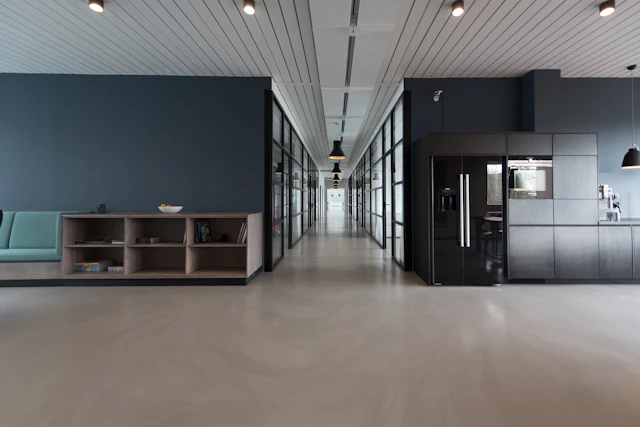
Administrative Buildings
School offices, meeting rooms, and service spaces linked to educational operations run on different schedules than teaching spaces — often with lower occupancy density but longer continuous operating hours. HVAC strategies for these areas benefit from independent zoning and scheduling flexibility. SongXin HVAC supports offices, meeting rooms, and service spaces linked to educational operations.
View Administrative Building Solutions
Libraries and Shared-Use Spaces
Libraries and community learning areas require a specific balance: stable, comfortable temperatures that support extended study sessions, combined with quiet HVAC operation that doesn't disrupt concentration. Noise levels from HVAC equipment matter here in a way they don't in a cafeteria or corridor. SongXin HVAC provides HVAC support for learning and community-use areas where comfort and quiet usability are both important.
View Shared-Space Solutions
Student Service Facilities
Cafeterias, activity rooms, and campus service areas experience some of the most variable occupancy patterns in any education building — packed at peak hours, nearly empty between them. HVAC systems serving these spaces need to respond to that variability without wasting energy during low-occupancy periods. SongXin HVAC supports cafeterias, activity rooms, and campus service areas used throughout the day.
View Student Service SolutionsWhat Do Education Buyers Usually Prioritize in an HVAC System?
Education customers evaluate HVAC systems through a lens shaped by student welfare, operational practicality, and long-term budget reality. Here's what consistently drives purchasing decisions:
| Priority | What It Means in Practice |
|---|---|
| Classroom Comfort | Stable temperature in the 20–25°C range that supports concentration — each 1°C above optimal range measurably affects test scores |
| Ventilation and Fresh Air | Outdoor air ventilation rates that prevent CO₂ buildup in high-occupancy classrooms and support healthy IAQ throughout the school day |
| Operational Reliability | Systems that support daily building use with dependable performance across the full academic year, including peak summer and winter periods |
| Room-Type Flexibility | HVAC strategies that reflect how classrooms, libraries, offices, and cafeterias are actually used — not a uniform building-wide approach |
| Campus-Wide Coordination | Cooling, ventilation, and controls working together across classrooms, offices, and shared-use spaces as a managed system |
| Long-Term Value | Solutions that remain practical to manage and cost-effective over time in high-use education environments with constrained maintenance budgets |
SongXin HVAC education solutions are built around these priorities so customers can create HVAC strategies that genuinely support learning environments and campus operations.
Which HVAC Products Work Best for Education Facilities?
Education buildings require coordinated product selection that accounts for building scale, room type, ventilation needs, and campus layout. Honestly, one of the most common planning mistakes in school HVAC projects is selecting products based on building size alone — without accounting for the room-by-room occupancy variation that makes education environments uniquely demanding. SongXin HVAC supports these facilities through five core product families:

VRF Systems
Variable refrigerant flow systems are particularly well-suited to education buildings because they deliver room-level climate control across spaces with very different occupancy patterns and thermal loads. A classroom running at full capacity, an empty administrative office, and a partially occupied library can all be conditioned independently — without the energy waste of a centralized system running at full capacity for every zone simultaneously. SongXin HVAC VRF systems provide flexible room-level climate control for classrooms, offices, and varied teaching spaces.
Explore VRF Systems
Air-Side Equipment
Air handling units and ventilation components are the delivery mechanism for the fresh air and IAQ performance that directly affects student outcomes. Research consistently shows that higher outdoor air ventilation rates correlate with measurably better academic performance — which means air-side equipment selection isn't just a mechanical decision, it's an educational investment. SongXin HVAC air-side equipment supports air handling, ventilation, and balanced indoor air distribution across occupied learning environments.
Explore Air-Side Equipment
Heat Pump Systems
Education buildings in climates with both heating and cooling seasons benefit from integrated heat pump systems that handle both functions within a single coordinated platform. This reduces the complexity of managing separate heating and cooling infrastructure — a practical advantage for facility teams managing large campuses with limited maintenance resources. SongXin HVAC heat pump systems support integrated heating and cooling needs in selected education buildings and campus facilities.
Explore Heat Pump Systems
Chiller Systems
Larger campus buildings and multi-building education environments require centralized cooling capacity that VRF or split systems can't efficiently deliver at scale. Chiller systems provide the thermal backbone for these broader facility cooling needs, supporting coordinated temperature management across multiple buildings from a central plant. SongXin HVAC chiller systems support centralized cooling for larger campus buildings and broader education facilities.
Explore Chiller Systems
Control & Automation Solutions
School buildings follow predictable occupancy schedules — class hours, break periods, evenings, weekends, and long holiday breaks. Control and automation solutions that align HVAC operation with these schedules deliver meaningful energy savings without compromising comfort during occupied hours. They also give facility managers the visibility to identify underperforming zones before they become IAQ complaints. SongXin HVAC control and automation solutions improve HVAC coordination, scheduling, and building-level management across education spaces.
Explore Control SolutionsHow Does HVAC Improve Comfort in Classrooms and Learning Spaces?
Classroom HVAC performance has a direct, measurable impact on learning outcomes — and that's not a marketing claim, it's peer-reviewed science. A study of 140 fifth-grade classrooms found statistically significant associations between ventilation rates and mathematics scores, with temperature in the 20–25°C range consistently supporting better academic performance than warmer conditions. The EPA's review of the scientific literature confirms this pattern across dozens of independent studies conducted in the U.S. and globally.
What this means practically: classrooms need stable temperature control, adequate fresh air delivery, and airflow distribution that reaches every seat without creating uncomfortable drafts. SongXin HVAC helps customers evaluate comfort-focused HVAC strategies for classrooms, lecture rooms, training spaces, and other learning environments through product categories that support both usability and operational practicality.
View Classroom HVAC Solutions
Why Does Ventilation Matter So Much in Schools?
Ventilation is the single most impactful HVAC variable in education environments — more so than in almost any other building type. The reason is straightforward: classrooms concentrate large numbers of people in relatively small spaces for extended periods, generating CO₂, moisture, and airborne particulates at rates that quickly degrade indoor air quality without adequate fresh air supply.
Poor IAQ in schools has been linked to increased illness, more frequent asthma attacks, higher absenteeism, and decreased academic performance across multiple studies. Conversely, improving ventilation rates produces measurable gains in standardized test scores — up to 11 points per liter per second per person increase in ventilation rate in mathematics alone. That's a return on HVAC investment that goes well beyond comfort.
SongXin HVAC supports education ventilation strategies through air-side products that help customers improve airflow quality, fresh air introduction, and indoor air management across teaching and campus facilities.
View Education Ventilation SolutionsHow Do Chiller Systems Support Larger Campuses?
Larger campuses and multi-building education environments need HVAC coordination that goes beyond what building-level systems can provide. When you have classrooms, administrative offices, libraries, sports facilities, and public-use spaces all operating on different schedules and generating different thermal loads, centralized cooling from a chiller plant becomes the most practical and cost-effective approach.
The coordination benefit is significant. A well-designed central plant can serve multiple buildings simultaneously, respond to shifting loads across the campus throughout the day, and provide a single point of monitoring and management for facility teams. SongXin HVAC helps customers evaluate centralized cooling strategies for schools, training centers, and campus facilities where larger-scale thermal planning is part of the project's long-term value.
View Campus Cooling Solutions
How Does VRF Zoning Work for Education Buildings?
Education facilities contain spaces with dramatically different comfort needs and occupancy patterns operating simultaneously within the same building. A VRF system addresses this by allowing independent temperature control at the room level — so a fully occupied classroom, an empty meeting room, and a partially used library can all be conditioned appropriately without any zone affecting another.
The scheduling flexibility matters too. During evenings, weekends, and school holidays, individual zones can be shut down or set back without affecting the rest of the building — a meaningful energy saving in facilities that are unoccupied for a significant portion of the year. SongXin HVAC VRF-based education solutions help customers create more adaptable HVAC strategies for campuses and school buildings where multiple room functions must be supported within one coordinated system.
View Education VRF SolutionsHow Does Control and Automation Improve School HVAC Management?
Education buildings follow some of the most predictable occupancy schedules of any building type — which makes them ideal candidates for control and automation solutions that align HVAC operation precisely with actual use patterns. Automated scheduling, occupancy-based control, and building-wide monitoring all contribute to more efficient operation and better indoor conditions for students and staff.
The management benefit is just as important as the energy savings. Facility teams responsible for large campuses with dozens of spaces can't manually monitor every zone — control platforms that surface performance data, flag anomalies, and enable remote adjustment make that job manageable. SongXin HVAC control and automation solutions support education projects by helping customers create more organized HVAC strategies for learning environments where usability and operational simplicity both matter.
View Education Control Solutions
Why Do Buyers Choose SongXin HVAC for Education Projects?
Customers choose SongXin HVAC education solutions because they need HVAC strategies built around learning environments, indoor comfort, and long-term campus usability — not adapted from generic commercial building templates.
Learning-Focused Solution Logic
Solutions designed around the real needs of classrooms, campus spaces, and daily teaching environments, with awareness of how indoor conditions affect student outcomes.
Strong Ventilation and Comfort Support
Cooling, airflow, and fresh air products aligned with the needs of occupied education spaces where IAQ directly influences academic performance.
Broad Facility Relevance
Suitable for schools, campuses, training centers, libraries, and student service facilities across diverse education building types.
Long-Term Practicality
HVAC strategies developed to support reliable daily use across varied room functions and high-occupancy periods, with scheduling and automation that reduces operational burden.
Export-Oriented Cooperation
A business platform ready to support distributors, contractors, and project buyers serving education markets worldwide.
Can Education HVAC Support OEM / ODM Development?
Education HVAC is a strong category for distributors and brand owners because it serves schools, training facilities, and campus environments with practical, recurring HVAC demand that doesn't fluctuate with economic cycles. Institutional procurement cycles are predictable, project volumes are consistent, and the growing body of evidence linking IAQ to student outcomes is creating new urgency around HVAC upgrades in education facilities globally.
SongXin HVAC supports OEM and ODM partners who want to develop stronger education-focused product offerings through categories and solution logic aligned with real school and campus needs. Our structure helps partners create clearer positioning and stronger communication for learning environments where product credibility depends on demonstrated performance.
Discuss OEM / ODM Cooperation
Built for Distributors, Contractors, Campus Operators, and Project Buyers
Different customers approach education HVAC from different starting points — and that's exactly how it should be.
Distributors
A distributor focused on institutional market demand needs a supplier whose product range covers the full scope of education applications — from VRF zoning in individual classroom buildings to centralized chiller systems for large campuses.
Contractors
A contractor needs stronger product matching for classrooms and shared-use buildings, with clear technical guidance that speeds up specification.
Campus Operators
A campus operator prioritizes comfort, airflow quality, and daily usability — because in an education environment, HVAC complaints from teachers and students translate directly into administrative pressure.
Project Buyers
A project buyer wants a clearer way to compare HVAC strategies for education spaces with varied functions, without navigating generic product catalogues.
SongXin HVAC education solutions are designed to support all of these users — making education HVAC logic easier to understand and connecting product categories to real learning environment needs.
Frequently Asked Questions
Education HVAC covers classroom buildings, campus facilities, training centers, administrative buildings, libraries, shared-use spaces, and student service facilities including cafeterias and activity rooms. Each space type carries different occupancy patterns, ventilation requirements, and comfort needs — from high-density classrooms where IAQ directly affects academic performance, to quieter library environments where HVAC noise levels matter as much as temperature.
Education facilities typically use VRF systems for flexible room-level climate control, air-side equipment for ventilation and fresh air delivery, heat pump systems for integrated heating and cooling, chiller systems for centralized campus-wide cooling, and control and automation solutions for scheduling and building management. The right combination depends on building scale, room type, occupancy patterns, and campus layout.
Education environments require stronger ventilation to manage CO₂ buildup from high-density classroom occupancy, temperature control tight enough to support concentration and academic performance, and room-by-room zoning flexibility that reflects how differently classrooms, offices, libraries, and cafeterias are used throughout the day. Research confirms that ventilation rates and temperature directly affect standardized test scores — making HVAC an educational investment, not just a building service.
Yes. SongXin HVAC can help evaluate your school or campus environment and suggest suitable HVAC directions based on room use, airflow needs, building scale, and operational priorities — whether for a new school building, a campus upgrade, or OEM product development for education markets.
Yes. Education HVAC is a strong OEM and ODM category because it serves institutional and public-use markets with clear, recurring demand. The growing evidence base linking indoor air quality to student outcomes is driving new investment in school HVAC upgrades globally, creating consistent project pipeline for partners focused on education and institutional markets.
The evidence is substantial and consistent. Children in classrooms with higher outdoor air ventilation rates achieve higher scores on standardized tests in math and reading. One study found mathematics scores increased by up to 11 points per liter per second per person increase in ventilation rate, with an additional 12–13 point improvement for each 1°C decrease in temperature within the 20–25°C range. Poor IAQ is also directly linked to increased illness, asthma attacks, and absenteeism.
Key references include the U.S. EPA's Indoor Air Quality Tools for Schools program, ASHRAE Standard 62.1 for ventilation and acceptable indoor air quality in occupied spaces, and local building codes that set minimum outdoor air supply rates for classrooms and educational occupancies. The EPA has compiled extensive scientific literature confirming the relationship between school ventilation rates and academic performance outcomes.
Build a Better HVAC Strategy for Learning Environments
Whether you're planning a school, a training center, a campus facility, or another education environment, SongXin HVAC is ready to help you connect the right cooling, ventilation, and control solutions to your building needs. The facilities that invest in proper HVAC from the start don't just create more comfortable spaces — they create environments where students can actually focus, teachers can do their best work, and facility teams aren't constantly managing complaints. That's the real return on getting education HVAC right.