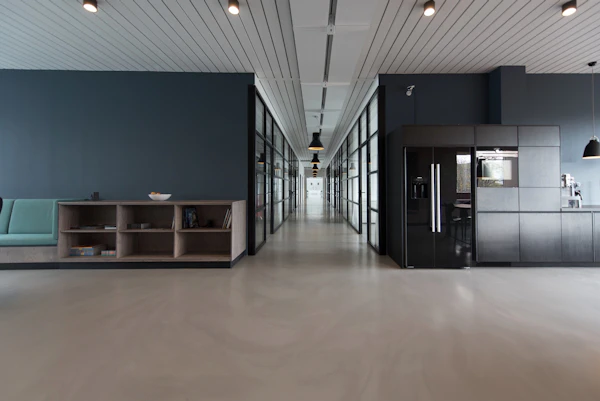
Modern indoor workspace air quality
Fresh Air & Ventilation Solutions

Fresh Air & Ventilation Solutions for Better Indoor Air Quality, Airflow Balance, and Occupant Comfort

Americans spend about 90% of time indoors, while EPA research shows indoor pollutant concentrations often run 2–5 times higher than outdoor levels in poorly ventilated spaces.

SongXin HVAC fresh air and ventilation solutions help buildings deliver cleaner air, balanced distribution, and practical IAQ performance across commercial, hospitality, residential, institutional, industrial, and technical applications.

“Temperature control gets attention, but ventilation determines how a building feels every day. Without proper fresh air and airflow design, even well-sized cooling systems underperform.” — SongXin HVAC Technical Solutions Team

Office indoor environment
01 2–5x Indoor vs Outdoor
Building IAQ monitoring dashboard
02 IAQ + Airflow
$13.41B → $21.71BGlobal AHU Market 2024 to 2034
$30.83BResidential Ventilation 2025
7.3%Residential Ventilation CAGR
$10.5B → $12.9BU.S. IAQ Market 2024 to 2029
Why Essential

Why Ventilation and Air Quality Are Essential in Modern HVAC Planning

Heating and cooling alone cannot solve indoor air quality challenges. Ventilation determines CO2 concentration, pollutant dilution, humidity behavior, and how indoor spaces actually feel in daily use.

A complete strategy introduces fresh air appropriately, distributes it effectively, and coordinates ventilation with thermal control and humidity management.

Ventilation design discussion
Indoor air quality context
2–5x Indoor vs Outdoor Pollutants
Ventilation Logic

Why Fresh Air and Airflow Matter Beyond Temperature Control

Ventilation is the primary lever for diluting contaminants and managing perceived air quality. Distribution quality determines whether outdoor air reaches occupants or short-circuits unused zones.

When ventilation is weak or poorly balanced, comfort complaints persist even when cooling capacity is technically adequate.

Fresh Air Supply

Outdoor air rates matched to occupancy and use profile are the foundation for CO2 and contaminant control.

Balanced Distribution

Air must reach occupants; distribution quality determines the usable effect of any ventilation strategy.

Measurable IAQ

CO2, relative humidity, and particulate signals connect system behavior to real indoor outcomes.

Efficiency Without Waste

Heat recovery and demand-controlled ventilation reduce the energy penalty of continuous fresh air.

Applications

What Types of Projects Fall Under Fresh Air & Ventilation Solutions

SongXin HVAC supports ventilation and IAQ outcomes across commercial, hospitality, residential, institutional, industrial, and technical environments.

Office buildings
01 · Office Buildings

CO2-Responsive Ventilation

Improve occupant comfort, focus, and productivity with ventilation that tracks occupancy.

Hotels and hospitality
02 · Hotels & Hospitality

Quiet Fresh Air

Draft-free outdoor air across guest rooms and public zones with effective odor control.

Residential buildings
03 · Residential Buildings

HRV / ERV Orientation

Ventilation aligned with tight-construction homes and multi-family apartments.

Public and institutional
04 · Public & Institutional

Health & Performance IAQ

Schools and civic spaces where indoor air strongly influences outcomes.

Industrial facilities
05 · Industrial Facilities

Dilution & Local Exhaust

General ventilation plus targeted exhaust for process-related contaminants.

Technical environments
06 · Technical Environments

Airflow Around Equipment

Thermal organization and airflow support for equipment-dense operations.

Buyer Priorities

What Fresh Air & Ventilation Buyers Actually Prioritize

Buyers evaluate ventilation using fresh air rates, distribution quality, measurable IAQ, comfort, energy impact, system coordination, and application fit.

SongXin HVAC structures recommendations around these practical criteria and real operating conditions.

Fresh Air Supply

Outdoor air rates matched to occupancy; primary lever for CO2 and dilution.

Balanced Distribution

Air reaches occupants instead of short-circuiting; determines usable ventilation effect.

Indoor Air Quality

Measurable outcomes: CO2, RH, and particulate control linked to health and productivity.

Occupant Comfort

Fresh, stable, non-drafty air movement; poor comfort negates system value.

Energy Efficiency

Ventilation without excessive thermal penalty; heat recovery and DCV reduce fresh-air cost.

System Coordination

Ventilation integrated with heating, cooling, and control to avoid cross-system conflicts.

Application Suitability

Strategy matched to building pattern and operations; generic approaches fail in variable-use spaces.

Core Products

Which HVAC Products Deliver the Most Effective Ventilation Performance

Strong ventilation outcomes usually combine central air handling, dedicated outdoor air, room terminals, distribution hardware, and coordinated controls.

Air Handling Units (AHUs)

Centralized air treatment, filtration, conditioning, and energy recovery for larger buildings.

Fresh Air Handling Units (FAHUs)

Dedicated outdoor air treatment for high-ventilation-demand applications.

Fan Coil Units (FCUs)

Room-level thermal support working alongside centralized fresh air systems.

Air-Side Equipment

Duct, diffuser, grille, and damper strategy to ensure effective occupant delivery.

Control & Automation

Demand-controlled ventilation and integrated monitoring for performance and efficiency.

Centralized AHU ventilation strategy

How Air Handling Units Support Building-Wide Ventilation

AHUs unify filtration, outdoor air introduction, thermal conditioning, and recovery into one coordinated strategy.

For multi-zone buildings, this is often the highest-impact ventilation infrastructure investment.

Occupants in indoor workspace

Why Fresh Air Supply Is Critical for Occupied Spaces

Without adequate fresh air, CO2 and pollutants accumulate, reducing comfort and cognitive performance even when temperature looks correct.

Building type-specific fresh air design is essential for practical IAQ outcomes.

Industrial ventilation environment

How Ventilation Supports Industrial and Operational Environments

Industrial ventilation combines dilution, local exhaust, heat management, and pressure zoning to support safety and process continuity.

It is not simply scaled-up comfort ventilation.

Smart ventilation control interface

How Smart Control Improves Ventilation Performance

Demand-controlled ventilation adapts airflow to real occupancy and IAQ signals, improving indoor quality while reducing unnecessary energy use.

Visibility, trend analysis, and remote management turn ventilation into a managed asset.

Why SongXin HVAC

Why Buyers Choose SongXin HVAC for Fresh Air & Ventilation Projects

Customers need ventilation thinking that connects airflow behavior, product architecture, and controls — not temperature-only assumptions.

Indoor-Environment Logic

Starts from airflow behavior and occupancy reality, not temperature-only assumptions.

Strong Air-Side Support

AHU, FAHU, FCU, distribution, and controls aligned by building needs.

Broad Application Relevance

Practical across offices, hotels, homes, schools, industry, and technical spaces.

System-Level Value

Ventilation strategy coordinated with thermal performance and lifecycle efficiency.

Export-Oriented Cooperation

Structured support for global markets with evolving IAQ expectations.

OEM ODM ventilation partnership strategy
Strategy
Manufacturing
Manufacturing
Export logistics
Export
OEM / ODM

Does Fresh Air & Ventilation Support OEM / ODM Development?

Yes. Ventilation is one of the broadest and most durable growth categories across building sectors, with strong regulatory and demand-side momentum.

SongXin HVAC supports partners developing specialized ventilation-focused product platforms for global markets.

Discuss OEM / ODM Cooperation
Who We Serve

Who SongXin HVAC Fresh Air & Ventilation Solutions Are Built For

Stakeholders evaluate ventilation from market coverage, installation reality, asset appeal, or procurement clarity.

Our narrative supports distributors, contractors, developers, and project buyers with practical, comparable language.

Distributors

Build category depth in fast-growing ventilation and IAQ-driven market segments.

Contractors

Match product architecture to building type, occupancy profile, and control integration needs.

Developers

Improve asset appeal, occupant retention, and long-term usability through better IAQ strategy.

Project Buyers

Compare ventilation options through practical performance criteria and application fit.

FAQ

Frequently Asked Questions

Commercial, hospitality, residential, institutional, industrial, and technical environments where IAQ and airflow quality affect outcomes.

AHUs, FAHUs, FCUs, air-side distribution products, and controls such as demand-controlled ventilation.

Cooling and heating manage temperature, while ventilation manages air composition, contaminants, CO2, humidity, and occupancy-response behavior.

ASHRAE 62.1 is a common reference; many offices use roughly 5–10 CFM per person with adjustments by occupancy and use type.

Energy recovery systems can reclaim a substantial portion of exhaust-air energy, reducing conditioning load of outdoor air.

Yes. We evaluate building type, occupancy profile, fresh air demand, and system coordination requirements to recommend suitable paths.

Yes. SongXin HVAC supports partners building specialized air-side and IAQ-focused product portfolios for global markets.

Get Started

Ready to Build a Better Fresh Air & Ventilation Strategy for Your Building?

Whether you are planning an office, hotel, residential project, institutional facility, industrial operation, or technical space, SongXin HVAC helps align ventilation products and system logic with real performance needs.

Indoor airflow comfort space
Modern office with balanced ventilation
Building indoor environment