Public service · civic comfort · reliable operation
Government & Municipal HVAC Solutions for Public Service Buildings, Civic Comfort, and Reliable Daily Operation
SongXin HVAC provides government and municipal HVAC solutions designed for civic buildings, public administration spaces, municipal service facilities, and community-use environments where comfort, ventilation, operational reliability, and long-term usability are essential. In these buildings, HVAC isn't just about temperature — it directly supports public service delivery, staff productivity, visitor comfort, and the practical day-to-day function of spaces used by communities and government teams every working day.
Our government and municipal solutions page helps distributors, contractors, project buyers, and OEM/ODM partners explore HVAC strategies for administrative buildings, civic service centers, public offices, municipal facilities, and shared-use government environments. From centralized cooling and flexible zoning to ventilation support, air handling, and building-wide control, SongXin HVAC helps customers identify practical HVAC directions for government and municipal buildings where reliability and usability matter every day.

HVAC for Buildings That Support Public Service and Community Use
Government and municipal buildings serve a wider variety of functions under one roof than almost any other building category. Administration offices, public service counters, waiting areas, conference rooms, records rooms, and multi-use civic halls all operate simultaneously — often on different schedules, with different occupancy densities, and with completely different indoor comfort requirements. That variety is exactly what makes a generic HVAC approach so inadequate for these facilities.
Americans spend approximately 90% of their time indoors, and their comfort, health, and work performance rely heavily on indoor environmental quality. For government buildings, that statistic carries a specific weight: staff who process public applications, manage civic services, and support community operations spend their entire working day inside these spaces. So do the members of the public they serve. When indoor conditions are poor — unstable temperatures, inadequate ventilation, stale air in waiting rooms — the consequences show up in staff productivity, visitor experience, and the overall quality of public service delivery.
SongXin HVAC approaches government and municipal HVAC from the perspective of how these buildings are used in real life. We help customers evaluate systems based on room function, public access patterns, ventilation needs, and long-term operational practicality — so the HVAC strategy better supports the building's role in public service.

Why Public Service Buildings Need More Than Standard Comfort Cooling
Government and municipal facilities combine demands that standard office HVAC simply isn't designed to handle. A public service counter sees variable visitor traffic throughout the day. A civic meeting room sits empty for hours, then fills to capacity for a community session. An administrative office runs continuous occupancy from opening to close. Each of these spaces needs a different HVAC response — and they all need to work together within one coordinated building system.
The productivity case for proper ventilation in these environments is well-documented and financially concrete. Research published in the journal Environmental Health Perspectives found that doubling ventilation rates in office environments improved worker performance by 8% — equivalent to that $6,500 per employee per year productivity gain. A prospective study of ventilation rates and illness absence in office buildings found that lower ventilation rates were directly associated with higher rates of short-term sick leave among workers. In government buildings where staffing continuity directly affects public service delivery, those numbers translate into real operational costs.
Adequate ventilation rates improve performance on cognitive work and reduce illness symptoms by replacing contaminated air with filtered outdoor air. A dedicated government and municipal HVAC strategy aligns cooling, heating, ventilation, and control products with the actual needs of civic-use buildings — supporting better service environments, improving everyday usability, and helping the HVAC system contribute more effectively to long-term facility operation.
What Types of Facilities Does Government & Municipal HVAC Cover?
SongXin HVAC government and municipal solutions support a wide range of public-service and civic-use environments where comfort, airflow, and reliable HVAC operation are important to daily function.
Administrative Buildings
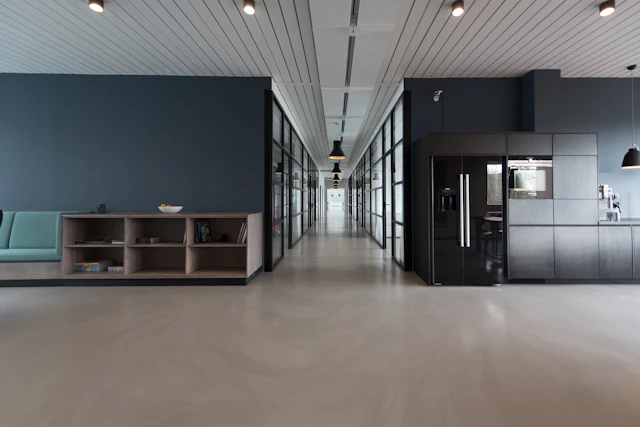
Government administration offices carry consistent daily occupancy across multiple departments, often in open-plan layouts that require balanced airflow distribution and stable temperature management throughout the working day. Poor indoor conditions in these spaces directly affect staff output and public-facing service quality. SongXin HVAC supports public administration offices, meeting rooms, and staff areas with dependable daily HVAC performance.
View Administrative Building Solutions
Municipal Service Centers
Public-facing service centers experience some of the most variable occupancy patterns in any government building — quiet during off-peak hours, crowded during morning rushes and lunch periods. Ventilation strategies for these spaces need to manage CO₂ buildup and maintain air quality during peak visitor periods without overcooling or overheating during quieter times. SongXin HVAC provides practical heating, cooling, and ventilation support for public-facing service environments.
View Service Center Solutions
Civic Office Spaces
Departmental offices, planning rooms, and government team workspaces require the kind of stable, comfortable indoor conditions that support sustained cognitive work. Research consistently links adequate ventilation and thermal comfort to measurable improvements in office worker performance and reductions in sick-day absenteeism. SongXin HVAC helps create more comfortable and usable office environments for government teams and public staff.
View Civic Office Solutions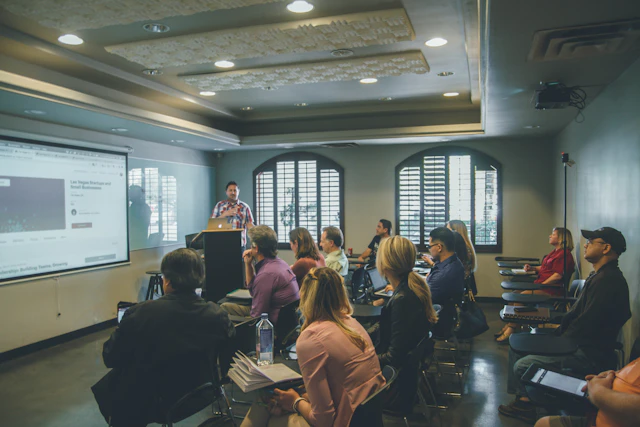
Public Reception Areas
Waiting zones, service counters, and public-facing entry areas present a specific HVAC challenge: high foot traffic, variable occupancy, and the need to maintain comfortable conditions for visitors who may have limited tolerance for uncomfortable indoor environments. These spaces also benefit from well-organized airflow that doesn't create drafts at service counters or uncomfortable temperature variations between seated waiting areas and standing service positions. SongXin HVAC supports waiting zones, counters, and service-facing spaces where visitor comfort and airflow both matter.
View Reception Area Solutions
Community-Use Buildings
Civic halls, community meeting rooms, and multi-purpose public buildings require HVAC flexibility — the ability to condition a large space for a full community meeting one evening and return it to setback mode overnight. VRF zoning and scheduling-capable control systems are particularly well-suited to these variable-use environments. SongXin HVAC provides HVAC support for buildings used for meetings, services, and other shared public functions.
View Community Building Solutions
Support and Utility Spaces
Building plant rooms, server rooms, records storage areas, and service corridors all require HVAC strategies appropriate to their specific function — whether that's equipment cooling, humidity control for document preservation, or basic ventilation for maintenance access areas. SongXin HVAC supports building-related rooms and service areas that help maintain daily facility operation.
View Support Space SolutionsWhat Do Government & Municipal Buyers Usually Prioritize in an HVAC System?
Government and municipal customers evaluate HVAC systems through a lens shaped by public accountability, operational reliability, and long-term budget responsibility. Here's what consistently drives purchasing decisions in this sector:
| Priority | What It Means in Practice |
|---|---|
| Public and Staff Comfort | Stable indoor conditions that support both employee productivity and positive visitor experience — directly linked to service quality perception |
| Ventilation and Air Quality | Adequate outdoor air ventilation rates that reduce illness, improve cognitive performance, and support healthier public environments — worth up to $6,500 per employee per year in productivity gains |
| Operational Reliability | Systems that support dependable daily use in service-oriented civic environments where HVAC failure affects public service delivery, not just occupant comfort |
| Room-Type Flexibility | HVAC strategies that reflect how civic offices, service counters, public rooms, and support sections are actually used — not a uniform building-wide approach |
| System Coordination | Cooling, heating, and ventilation working together across all building zones as a managed, schedulable system |
| Long-Term Practicality | Solutions that remain manageable and cost-effective over time in buildings serving the public every day, with maintenance requirements suited to public-sector facility teams |
SongXin HVAC government and municipal solutions are built around these priorities so customers can create HVAC strategies that genuinely support public-service environments and long-term building usability.
Which HVAC Products Work Best for Government & Municipal Buildings?
Government and municipal environments require coordinated product selection that accounts for building scale, room type, occupancy patterns, and the specific demands of public-use spaces. The trick is matching product capabilities to actual building use — a VRF system that handles individual room zoning brilliantly in a departmental office building may need to be paired with a chiller plant to serve a larger civic complex effectively. SongXin HVAC supports these facilities through five core product families:

VRF Systems
Variable refrigerant flow systems are particularly well-suited to government buildings with multiple room types operating on different schedules. A public service counter, a staff office, a conference room, and a records storage area can all be conditioned independently — without the energy waste of running a centralized system at full capacity for every zone simultaneously. The scheduling flexibility also allows unoccupied areas to be set back during evenings and weekends without affecting occupied sections of the building. SongXin HVAC VRF systems provide flexible room-level climate control for offices, meeting rooms, and different public-use areas.
Explore VRF Systems
Chiller Systems
Larger civic buildings and multi-building municipal campuses require centralized cooling capacity that building-level systems can't efficiently deliver at scale. Chiller systems provide the thermal backbone for coordinated temperature management across multiple departments, service areas, and public zones — from a single, manageable central plant. SongXin HVAC chiller systems support centralized cooling for larger civic buildings and broader municipal facilities.
Explore Chiller Systems
Air-Side Equipment
Air handling units and ventilation components deliver the fresh air performance that directly affects staff productivity and public comfort in government buildings. Adequate ventilation rates improve performance on cognitive work and reduce illness symptoms — and air-side equipment selection is the mechanism that makes those ventilation rates achievable and maintainable across the building. SongXin HVAC air-side equipment supports ventilation, air handling, and airflow distribution across public-facing and administrative spaces.
Explore Air-Side Equipment
Heat Pump Systems
Government and municipal buildings in climates with meaningful heating seasons benefit from integrated heat pump systems that manage both heating and cooling within a single coordinated platform. This simplifies infrastructure management for facility teams responsible for large buildings with limited maintenance resources — and aligns with the direction of updated energy efficiency standards that increasingly favor heat pump technology for public buildings. SongXin HVAC heat pump systems support broader heating and thermal comfort needs in selected government and municipal facilities.
Explore Heat Pump Systems
Control & Automation Solutions
Public buildings follow predictable occupancy schedules — service hours, meeting cycles, public access periods, and regular closures. Control and automation solutions that align HVAC operation with these schedules deliver meaningful energy savings without compromising comfort during occupied hours. They also give facility managers the visibility to identify underperforming zones, track energy consumption, and respond to building conditions proactively rather than reactively. SongXin HVAC control and automation solutions improve building-level HVAC coordination, scheduling, and practical daily system management.
Explore Control SolutionsHow Does HVAC Support Comfort in Civic Offices and Public Service Spaces?
Government and municipal buildings need indoor conditions that support both public service delivery and sustained daily office work — and those two requirements don't always point in the same direction. Public-facing rooms need to accommodate variable visitor loads without temperature swings that make waiting uncomfortable. Internal office spaces need the stable thermal conditions and adequate ventilation that support cognitive performance throughout the working day.
The financial case for getting this right is clear. Improving ventilation in office environments can generate up to $6,500 per employee per year in productivity gains — a return that dwarfs the incremental cost of a properly specified ventilation system. For government buildings where staff headcount is significant and service continuity is a public obligation, that's not an abstract benefit. It's a measurable return on infrastructure investment. SongXin HVAC helps customers evaluate climate control solutions for civic-use environments through product categories that support practical comfort and daily building usability.
View Civic Comfort Solutions
Why Does Ventilation Matter So Much in Public Buildings?
Ventilation is the single most impactful HVAC variable in government and municipal buildings — for the same fundamental reason it matters in any high-occupancy space: people generate CO₂, moisture, and airborne contaminants at rates that degrade indoor air quality without adequate fresh air supply. In public buildings where staff and visitors cycle through continuously throughout the day, that degradation happens faster and more consistently than in lower-occupancy environments.
The research on this is direct. A prospective study of ventilation rates and illness absence in office buildings found quantifiable associations between lower ventilation rates and higher rates of short-term sick leave. In government facilities where staffing gaps affect public service delivery, illness-related absenteeism isn't just a human resources issue — it's an operational and reputational one. Better ventilation is one of the most cost-effective interventions available to public building managers. SongXin HVAC supports government and municipal ventilation strategies through air-side products that help customers improve indoor air quality, airflow organization, and overall building comfort.
View Government Ventilation SolutionsHow Do Chiller Systems Support Larger Civic Facilities?
Larger government buildings and multi-building municipal campuses need HVAC coordination that goes beyond what building-level systems can efficiently provide. When you have administrative offices, public service halls, meeting rooms, records areas, and support facilities all operating under one facility management structure, centralized cooling from a chiller plant becomes the most practical and cost-effective approach at scale.
The coordination benefit compounds over time. A well-designed central plant can serve multiple building zones simultaneously, respond to shifting loads throughout the service day, and provide a single point of monitoring and management for facility teams — reducing the operational complexity of managing multiple independent systems across a large civic campus. SongXin HVAC helps customers evaluate centralized cooling solutions for government and municipal projects where scale, coordination, and long-term building performance are important.
View Municipal Cooling Solutions

How Does Control and Automation Improve Government Building HVAC Management?
Government buildings follow some of the most predictable occupancy schedules of any building type — fixed service hours, regular meeting cycles, consistent weekly patterns, and planned closure periods. That predictability makes them ideal candidates for control and automation solutions that align HVAC operation precisely with actual use patterns, delivering energy savings during unoccupied periods without compromising comfort when the building is serving staff and public users.
Honestly, the management visibility benefit matters just as much as the energy savings in public-sector contexts. Facility managers responsible for large civic buildings can't manually monitor every zone — control platforms that surface performance data, flag anomalies, enable remote adjustment, and generate the reporting that public-sector facility management increasingly requires make that job genuinely manageable. SongXin HVAC control and automation solutions support civic projects by helping customers create more organized HVAC strategies for buildings where reliable daily management is a public accountability requirement.
View Government Control SolutionsWhy Do Buyers Choose SongXin HVAC for Government & Municipal Projects?
Customers choose SongXin HVAC government and municipal solutions because they need HVAC strategies built around public service, daily usability, and long-term facility performance — not adapted from generic commercial building templates.
Civic-Use Solution Logic
Solutions designed around the real needs of public offices, service centers, and community-use buildings, with awareness of how indoor conditions affect both staff performance and public visitor experience.
Strong Comfort and Ventilation Support
Cooling, airflow, and heating strategies aligned with the practical demands of civic and municipal buildings where ventilation quality has a direct, measurable impact on productivity and absenteeism.
Broad Facility Relevance
Suitable for administrative buildings, service centers, civic offices, public reception spaces, community halls, and support environments across diverse government facility types.
Long-Term Operational Practicality
HVAC strategies developed to support dependable public service environments over time, with scheduling and automation that reduces operational burden on facility teams.
Export-Oriented Cooperation
A business platform ready to support distributors, contractors, and project buyers serving government and municipal markets worldwide.
Can Government & Municipal HVAC Support OEM / ODM Development?
Government and municipal HVAC is a strong category for distributors and brand owners because it serves civic and public-use buildings with practical, recurring HVAC demand that institutional procurement cycles make predictable and consistent. Public-sector building renovation and upgrade programs represent a significant and growing share of construction activity globally — driven by aging building stock, tightening energy efficiency standards, and increasing recognition that indoor environmental quality in public buildings has direct consequences for workforce productivity and public health outcomes.
SongXin HVAC supports OEM and ODM partners who want to develop stronger government and municipal product offerings through categories and solution logic aligned with real public-service building needs. Our structure helps partners create clearer market positioning and stronger communication for civic-use environments where product reliability and long-term performance are non-negotiable requirements.
Discuss OEM / ODM Cooperation
Built for Distributors, Contractors, Operators, and Project Buyers
Different customers approach government and municipal HVAC from different starting points — and that's exactly how it should be.
Distributors
A distributor focused on public-sector demand needs a supplier whose product range covers the full scope of government applications — from VRF zoning in departmental office buildings to centralized chiller systems for large civic campuses.
Contractors
A contractor needs stronger product matching for service counters, offices, and public rooms, with clear technical guidance that speeds up specification on institutional projects.
Operators
A building operator prioritizes daily usability and reliability — because in a government facility, HVAC failure affects public service delivery and carries reputational consequences that go beyond a simple comfort complaint.
Project Buyers
A project buyer wants a clearer way to compare HVAC strategies for civic-use facilities with varied functions, without navigating generic product catalogues that weren't designed with public buildings in mind.
SongXin HVAC government and municipal solutions are designed to support all of these users — making civic-building HVAC logic easier to understand and connecting product categories to real public-service needs.
Frequently Asked Questions
Government and municipal HVAC covers administrative buildings, municipal service centers, civic office spaces, public reception areas, community-use buildings, and support and utility spaces. Each facility type carries different occupancy patterns, ventilation requirements, and comfort demands — from high-traffic public service counters where visitor comfort directly affects service perception, to administrative offices where indoor air quality measurably affects staff productivity and absenteeism.
These buildings typically use VRF systems for flexible room-level climate control across offices and public spaces, chiller systems for centralized cooling in larger civic facilities, air-side equipment for ventilation and fresh air delivery, heat pump systems for integrated heating and cooling, and control and automation solutions for scheduling and building-wide management. The right combination depends on building scale, room type, occupancy patterns, and facility management resources.
Government buildings combine public-facing spaces, staff offices, service counters, shared-use rooms, and support areas that operate simultaneously with different occupancy profiles and comfort requirements. They also carry a public accountability dimension — poor indoor conditions affect service delivery quality and public perception in ways that standard commercial buildings don't face. Research confirms that adequate ventilation in these environments improves cognitive performance by up to 8% and can generate $6,500 per employee per year in productivity gains.
Yes. SongXin HVAC can help evaluate your building type and suggest suitable HVAC directions based on room use, public access patterns, building scale, and facility management priorities — whether for a new civic building, a municipal upgrade project, or OEM product development for government and public-sector markets.
Yes. Government and municipal HVAC is a strong OEM and ODM category because it serves civic and public-use markets with practical, recurring demand. Institutional procurement cycles are predictable, renovation programs are ongoing, and the growing evidence base linking indoor environmental quality to workforce productivity is creating new urgency around HVAC upgrades in public buildings globally.
The evidence is direct and financially quantifiable. Research from Harvard T.H. Chan School of Public Health found that improving ventilation in office environments can generate up to $6,500 per employee per year in productivity gains. A separate peer-reviewed study found that doubling ventilation rates improved worker performance by 8%. A prospective study of office ventilation rates found that lower ventilation rates were directly associated with higher rates of short-term sick leave. In government buildings where staffing continuity affects public service delivery, these are operational metrics, not just comfort statistics.
Key references include ASHRAE Standard 62.1 for ventilation and acceptable indoor air quality in occupied spaces, local and national building energy codes governing new construction and major renovations, and the U.S. GSA's Indoor Environmental Quality guidelines for federal facilities. Updated 2025 energy efficiency standards in multiple jurisdictions are also expanding requirements for heat pump systems and strengthened ventilation standards in public and commercial buildings.
Build a Better HVAC Strategy for Government & Municipal Environments
Whether you're planning an administrative building, a municipal service center, a civic office, or another public-use facility, SongXin HVAC is ready to help you connect the right cooling, ventilation, and control solutions to your building needs. Government buildings that invest in proper HVAC don't just create more comfortable spaces — they create environments where staff can do their best work, where the public receives better service, and where facility managers aren't constantly managing complaints and unplanned maintenance. That's the real return on getting civic HVAC right.